Description
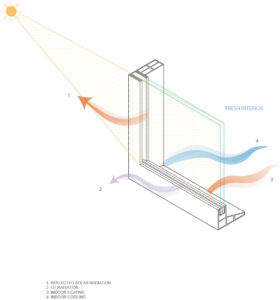
Low-emissivity glazing uses thin metallic or metal-oxide coatings to reduce long-wave radiant heat transfer through glass.
For heatwave adaptation, low-e glazing is most effective when combined with appropriate solar-control properties, including a suitable SHGC/g-value, while maintaining adequate daylight transmission. It can reduce heat gains through glazed façades and improve indoor thermal comfort.
Image
Please download the PDF to have the information sent directly to your email address.
Healthcare Waste Insulation
Send download link to:
Implementation Guide
- Assess façade orientation, glazing ratio and overheating risk
- Select glazing according to U-value, SHGC/g-value and visible light transmission
- Combine low-e coatings with solar-control properties where summer overheating is significant
- Use double or triple insulated glazing units where appropriate
- Coordinate glazing performance with external shading and façade design
- Verify glare, daylight and condensation performance
Benefits and Limitations
Benefits
- Reduces radiant heat transfer through glazing
- Can reduce solar heat gains when combined with low g-value glazing
- Improves thermal comfort and cooling performance
- Maintains daylight and outward views
- Provides long service life with low maintenance
Limitations
- Higher cost than conventional glazing
- Low-e coating alone may not adequately prevent overheating
- Solar-control performance depends on the selected SHGC/g-value
- Replacement glazing has a higher embodied impact than simpler retrofit measures
- Excessive solar control may reduce useful winter gains or daylight
Parameter and data
Design High-performance glazing system selected according to thermal insulation, solar-control and daylight requirements
For heatwave resilience, low emissivity should be combined with an appropriate SHGC/g-value, particularly on highly solar-exposed façades
Materials and Components
- Float glass
- Low-emissivity metallic or metal-oxide coating
- Double or triple insulated glazing units
- Argon or krypton gas fill where applicable
- Warm-edge spacers
- Edge seals
- Solar-control coating where required
Application Windows, curtain walls, skylights, glazed façades and atria in residential, commercial and public buildings
Technical Properties
- Double IGU: Approximately 24–32 mm
- Triple IGU: Approximately 36–50+ mm
- Weight: Approximately 20–50 kg/m², depending on glass thickness and number of panes
Thermal / Cooling Performance Provides medium–high reduction of heat transfer through glazed envelope elements when an appropriate low SHGC/g-value is selected
Performance depends on glazing orientation, solar-control properties, façade area, shading and the characteristics of the complete façade system
Operation Passive, no operational energy input is required
Advantages Combines thermal insulation, solar-control potential, daylight transmission and long service life within a conventional glazing system
Applicability Criteria Suitable for glazed façades, windows and skylights where reduction of heat transfer and solar gains is required
For heatwave-prone buildings, the glazing should be selected according to both emissivity and SHGC/g-value, rather than specifying low-e performance alone
External shading should be considered where solar exposure is particularly high
Expected Service Life 20–30+ years, depending primarily on insulated-glazing-unit seal durability and environmental exposure
Please download the PDF to have the information sent directly to your email address.
Healthcare Waste Insulation
Send download link to: