
Description
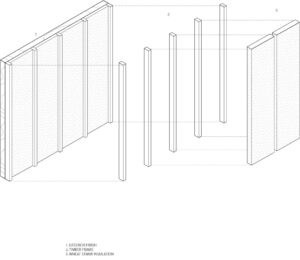
Insulation from non-infectious healthcare waste is a circular-economy material produced from selected healthcare waste streams, such as single-use plastics and medical packaging, that are processed into thermal and acoustic insulation products.
When incorporated into walls, roofs and floors, the material reduces conductive heat transfer through the building envelope while diverting suitable waste streams from incineration or landfill.
Image
Please download the PDF to have the information sent directly to your email address.
Healthcare Waste Insulation
Send download link to:
Implementation Guide
- Use only controlled and non-infectious healthcare waste streams suitable for material recovery
- Select the insulation format and thickness according to the required thermal performance
- Verify product certification, fire performance and compatibility with building regulations
- Install continuously to minimize thermal bridges and air gaps
- Protect the insulation from prolonged water exposure and mechanical damage
- Combine with shading, reflective surfaces or ventilated envelopes for greater heatwave resilience
Benefits and Limitations
Benefits
- Reduces conductive heat gains through the building envelope
- Reuses selected healthcare waste streams and supports circular material flows
- Can provide high recycled content and good acoustic performance
- Lightweight and suitable for new construction and retrofit
- Low maintenance once protected within the building assembly
Limitations
- Availability depends on suitable waste-processing infrastructure
- Thermal and recycled-content properties vary between products
- Fire performance depends on polymer composition and additives
- Long-term field data and standardization may be more limited than for conventional insulation
- Recycling at end of life depends on material composition and local facilities.
Parameter and data
Design Thermal insulation layer designed according to the required U-value, climate conditions and building-envelope configuration
Material thickness and continuity should be defined through project-specific thermal calculations rather than generic heat-gain reduction percentages
Materials and Components
- Processed non-infectious healthcare plastics
- Medical packaging waste
- Recycled thermoplastics
- Binding or stabilizing agents where required
- Fire-retardant additives depending on product
Application Walls, roofs, ceilings, floors, cavities, partitions and modular construction systems in new buildings and retrofit projects
Technical Properties Thermal conductivity: Approximately 0.036 W/m·K in the referenced solution, although values should be verified for the specific product
Available formats may include blown-in insulation, batts, blankets and rigid boards
Thermal / Cooling Performance Reduces conductive heat transfer through roofs, walls and other envelope elements
Heatwave performance depends on insulation thickness, thermal conductivity, continuity of the insulation layer and the thermal characteristics of the complete building assembly
Operation Passive, no operational energy input is required
Advantages Combines conventional thermal-insulation performance with the recovery of selected healthcare waste streams, providing a lightweight circular-economy solution with low operational requirements
Applicability Criteria Suitable where certified products manufactured from controlled non-infectious healthcare waste streams are available and comply with thermal, fire, moisture and building-code requirements
Particularly relevant where local waste-management systems can provide reliable material recovery and traceability
Expected Service Life 30–50 years when protected within the building assembly and kept dry
Please download the PDF to have the information sent directly to your email address.
Healthcare Waste Insulation
Send download link to:





