
This category addresses strategies aimed at reducing overheating risks and maintaining indoor thermal comfort during extreme heat events. Measures focus on limiting heat gains, enhancing passive cooling, and improving microclimatic conditions. They contribute to occupant health, energy efficiency, and long-term climate adaptation of buildings.


Adaptive Thermal-Control Coating
Description Adaptive thermal-control coatings are advanced surface treatments designed to regulate solar heat gains and surface temperatures according to environmental conditions. Depending on the technology, they may modify solar [...]

Climate-Responsive Concrete Façade Panels
Description Climate-responsive concrete façade panels are prefabricated envelope elements designed to reduce solar heat gains through a combination of self-shading geometry, thermal mass, surface properties and, where appropriate, ventilated [...]
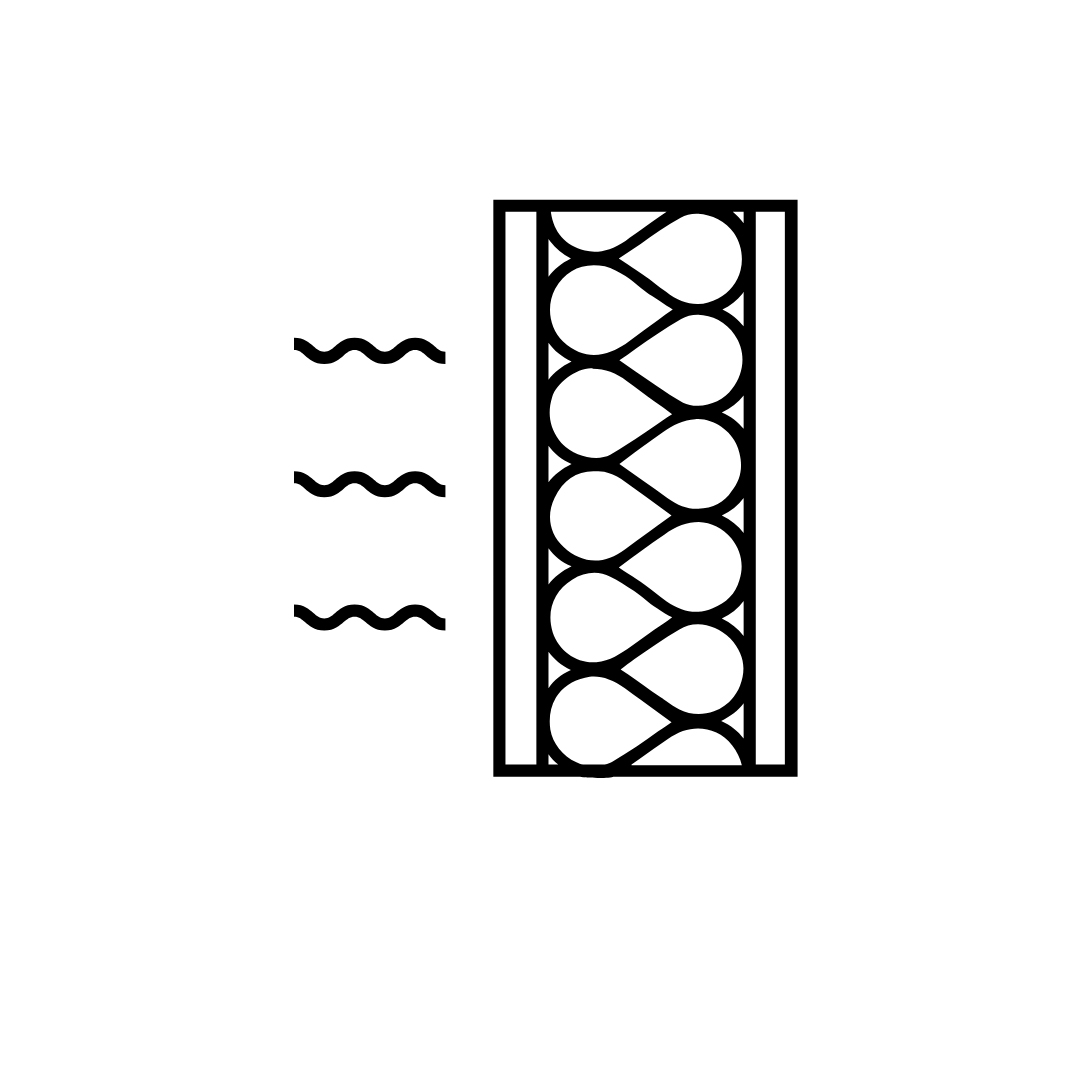
Phase Change Materials (PCM)
Description Phase Change Materials (PCM) store and release thermal energy through a reversible phase transition, typically within the indoor comfort temperature range. As temperatures rise, the material absorbs latent [...]
Gypsum Boards with PCM
Description Gypsum boards with Phase Change Materials (PCM) incorporate microencapsulated or stabilized PCM within plasterboard to increase indoor thermal-storage capacity without adding significant structural mass. As indoor temperatures rise, [...]
Healthcare Waste Insulation
Description Insulation from non-infectious healthcare waste is a circular-economy material produced from selected healthcare waste streams, such as single-use plastics and medical packaging, that are processed into thermal and [...]
Vacuum Insulated Panel (VIP)
Description Vacuum Insulation Panels (VIPs) are high-performance insulation elements composed of a porous core sealed within a gas-tight envelope and evacuated to very low pressure. Their extremely low thermal [...]
Aerogel Insulation
Description Aerogel insulation is a high-performance insulating material based mainly on a nanoporous silica structure and available as blankets, boards, renders or composite panels. Its very low thermal conductivity [...]
Porous Ceramic Façade Systems
Description Porous ceramic façade systems use water-absorbing ceramic elements that retain moisture and provide cooling through evaporation when exposed to airflow. The ceramic elements can be integrated as rainscreen [...]
Expanded Cork Insulation Board
Description Expanded cork insulation board is a natural, bio-based insulation material manufactured from cork granules expanded and bonded through their natural resins. Its combination of low thermal conductivity, relatively [...]

