Description
Hemp bricks are non-load-bearing insulating masonry units typically made from hemp shiv and a lime-based binder.
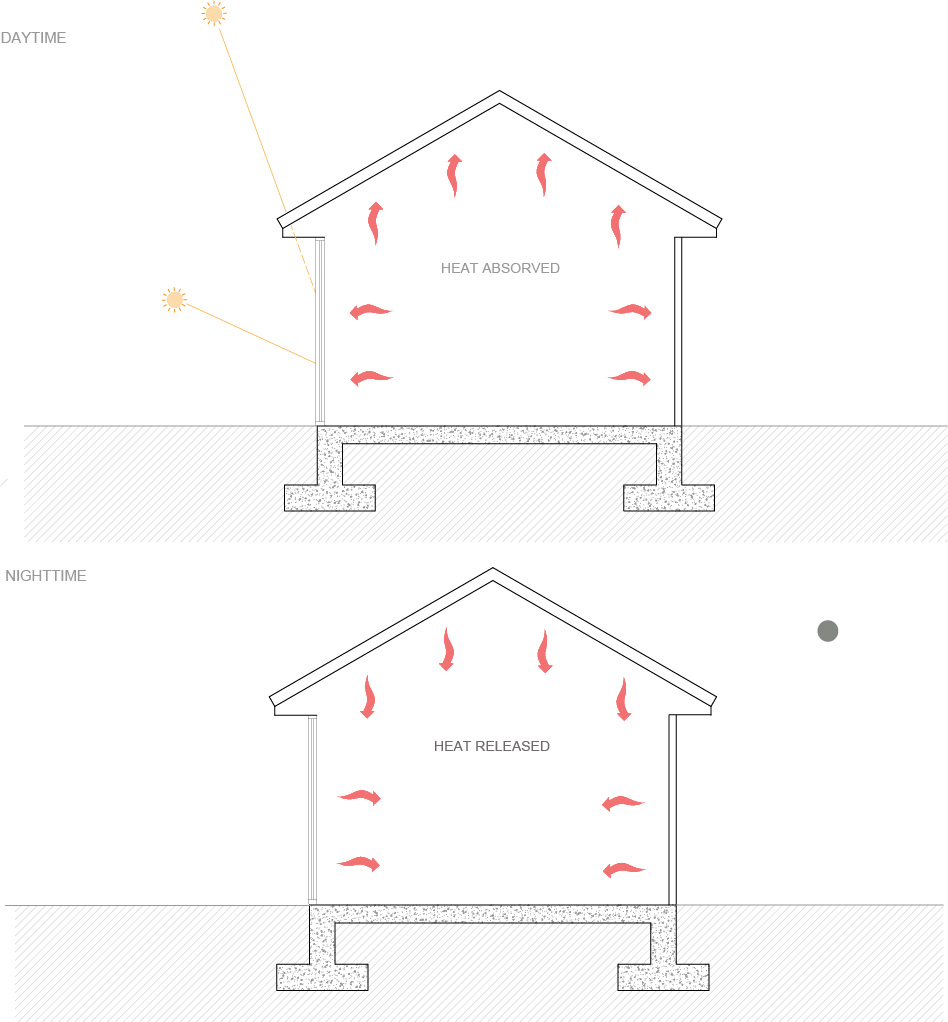
They combine thermal insulation, thermal inertia and moisture buffering, helping to delay and reduce heat transfer through walls during heatwaves. They are commonly used as infill within structural frames or as insulating wall systems protected by vapor-open renders or cladding.
Image

Please download the PDF to have the information sent directly to your email address.
Healthcare Waste Insulation
Send download link to:
Implementation Guide
- Use hemp bricks as non-load-bearing infill or insulating masonry
- Define wall thickness according to thermal and climate requirements
- Provide capillary breaks and protect the base from rising damp.
- Use vapor-open renders, cladding or rainscreen systems
- Allow adequate drying before final finishes are applied
- Verify fire, structural and moisture-performance requirements
Benefits and Limitations
Benefits
- Combines thermal insulation and thermal inertia
- Helps delay and dampen summer heat gains
- Bio-based material with low-carbon potential
- Provides moisture buffering and acoustic benefits
- Suitable for low-carbon and vapor-open construction systems
Limitations
- Generally non-structural and requires a supporting frame
- Requires greater wall thickness than many conventional insulation systems
- Moisture protection and drying are critical
- Availability and standardization vary by market
- Performance depends on formulation, density and complete wall build-up
Parameter and data
Design: Non-load-bearing insulating wall system using hemp-lime blocks or panels, designed according to thermal, moisture and dimensional requirements. The complete wall assembly should remain vapor-open where appropriate and be protected from persistent water exposure
Materials and Components:
- Hemp shiv
- Lime-based binder
- Water
- Mineral additives or pozzolans where applicable
- Vapor-open render or cladding
- Structural frame where required
Application: External wall infill, internal partitions, retrofit lining and low-rise bio-based construction
Technical Properties:
- Thermal conductivity: Approximately 0.060–0.090 W/m·K, depending on density and formulation
- Density: Approximately 250–500 kg/m³.
- Typical wall thickness: Commonly 250–400+ mm, depending on thermal-performance requirements
Key properties include: Thermal insulation, thermal inertia, vapor permeability, moisture buffering and acoustic absorption
Thermal / Cooling Performance: Reduces conductive heat transfer and helps delay and moderate indoor temperature peaks through the combined effect of insulation and thermal mass. Performance depends on wall thickness, density, moisture content and the thermal characteristics of the complete assembly
Operation: Passive, no operational energy input is required
Advantages: Provides a combination of insulation, thermal inertia, moisture buffering and bio-based content within a relatively simple masonry-type construction system
Maintenance: Low: Once correctly protected, routine maintenance is mainly associated with renders, cladding, base details and moisture-sensitive junctions
Environmental Impact: Low: Hemp-based materials can provide low embodied-carbon potential and biogenic carbon storage. Overall impact depends on binder composition, transport, wall thickness and protective layers
Applicability Criteria: Suitable for projects seeking bio-based wall systems with good thermal and moisture-buffering performance, particularly where sufficient wall thickness is available. Less suitable where very thin envelope build-ups or structural load-bearing masonry are required
Expected Service Life: 50+ years, provided that the material is protected from persistent moisture and that renders, cladding and base details are correctly maintained
Please download the PDF to have the information sent directly to your email address.
Healthcare Waste Insulation
Send download link to: