Description
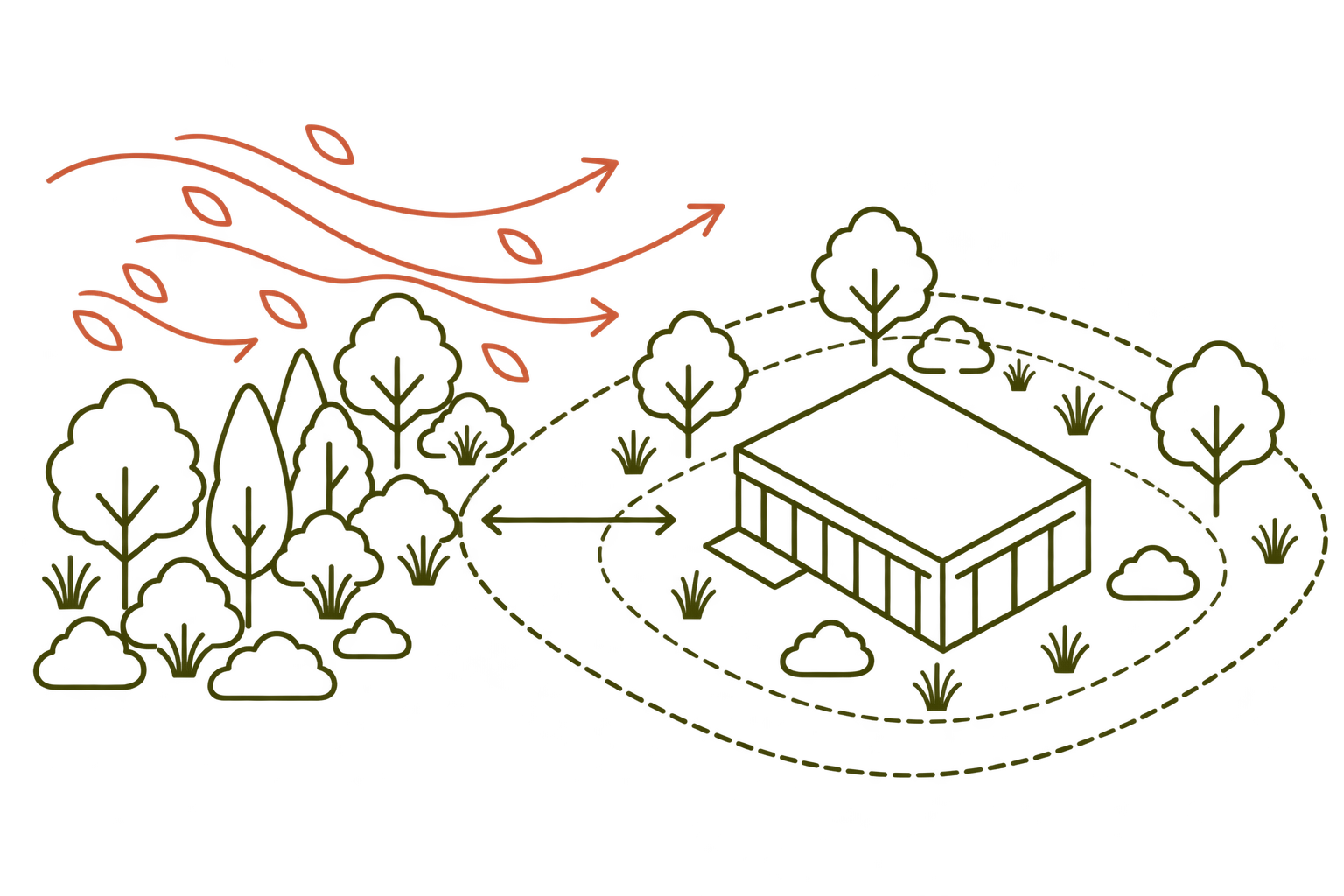
Routine clearance removes fine, dry fuels that ignite readily from embers. These fuels commonly accumulate in gutters, roof valleys, behind shutters, under decks, at façade bases, around vents and in wind-driven corners.
The measure is inexpensive but highly maintenance-dependent: effectiveness can disappear quickly during dry, windy periods if debris is allowed to build up again.
Image

Please download the PDF to have the information sent directly to your email address.
Healthcare Waste Insulation
Send download link to:
Implementation Guide
- Inspect roofs, gutters, valleys, balconies, decks, façade recesses, vents and the building perimeter
- Remove dry leaves, needles, small branches, dead plants and combustible waste before and during wildfire season
- Prioritise hidden areas under decks, behind screens and at roof/façade junctions
- Dispose of cleared material away from the building rather than creating nearby piles
- Inspect after windstorms or seasonal leaf fall
- Coordinate clearance with gutter guards and vegetation-management programmes
- Assign responsibility and frequency within facility-management procedures
Benefits and Limitations
Benefits
- Very low capital cost
- Directly removes easily ignitable ember fuels
- Reduces roof-edge and façade-base ignition risk
- Can be implemented immediately in existing buildings
- Improves the performance of many other wildfire-hardening measures
Limitations
- Requires frequent repetition
- Strongly dependent on facility-management behaviour
- Wind can rapidly redeposit debris
- Does not address structural combustibility
- Inaccessible roofs or cavities may require specialist access
Parameter and data
Application: Roofs, gutters, valleys, balconies, decks, undercrofts, vents, façade bases and near-building landscape
Target Fuels: Leaves, pine needles, dry grasses, twigs, branches, dead plants, cardboard and other fine combustible debris
Frequency: Risk-based and seasonal; increase after wind events, leaf fall and prolonged dry periods
Responsibility: Assign to facilities/landscape management with an explicit inspection checklist
Expected Service Life: Ongoing operational measure; benefit lasts only while surfaces remain clear
Maintenance: High: repeated inspection and removal throughout the fire season
Indicative Regulatory References: Regional/national wildfire maintenance guidance; building owner and facility-management procedures
Please download the PDF to have the information sent directly to your email address.
Healthcare Waste Insulation
Send download link to: