Description
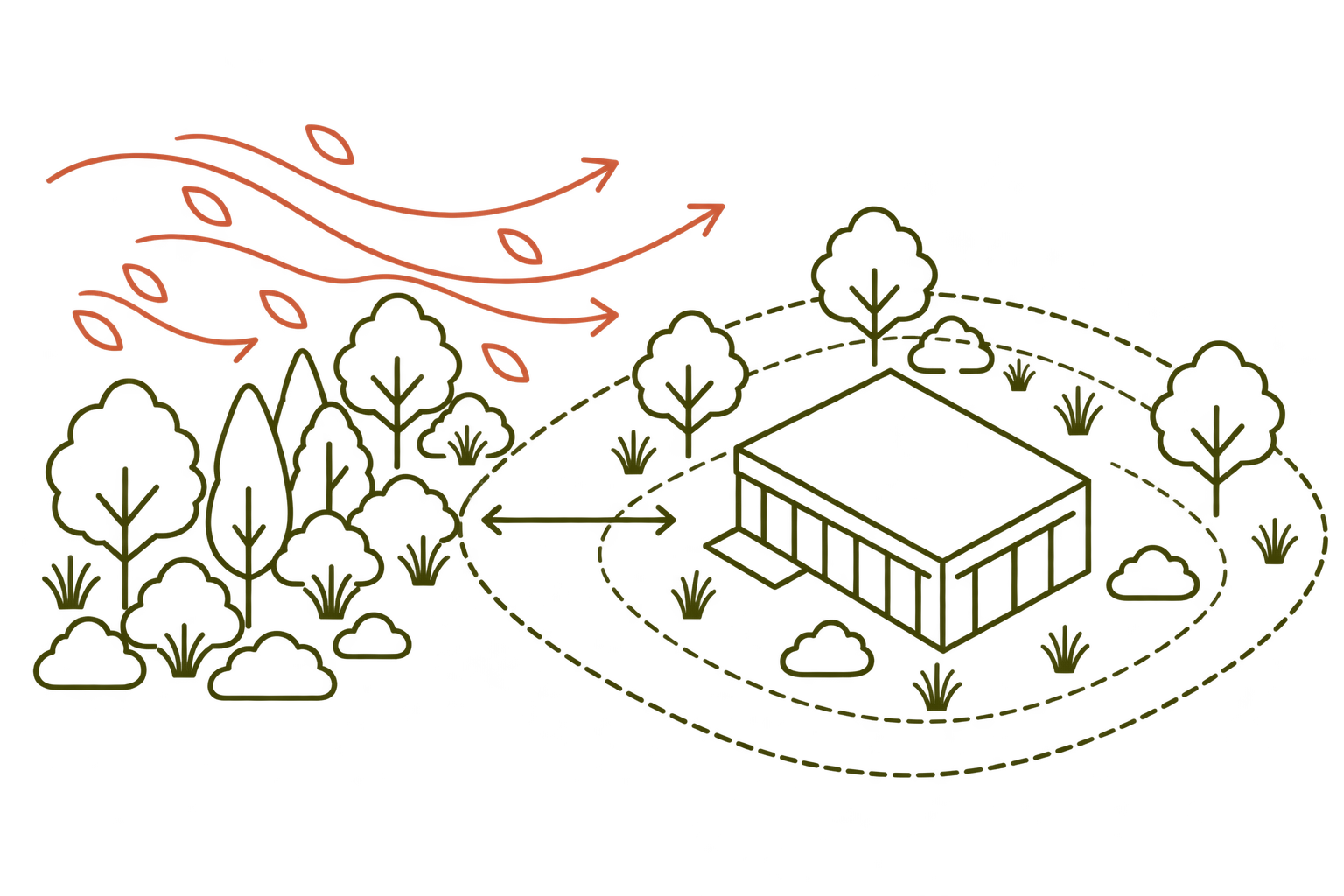
Firebreaks and fuel breaks are landscape-scale corridors where vegetation is removed, thinned, pruned or otherwise modified to reduce continuous fuel and support wildfire suppression. A firebreak may expose mineral soil or a road surface, while a fuel break generally retains managed vegetation at lower density.
They operate at a larger scale than defensible space and should be designed from fire behaviour, topography, wind, vegetation type, environmental constraints and access strategy. They do not guarantee that a severe wildfire will stop at the break.
Image
Please download the PDF to have the information sent directly to your email address.
Healthcare Waste Insulation
Send download link to:
Implementation Guide
- Assess probable wildfire approach directions, topography, vegetation type, slope and prevailing wind
- Select firebreak or fuel-break type and width using local wildfire guidance and fire-behaviour analysis
- Integrate existing roads, tracks, ridgelines or low-fuel areas where useful
- Maintain access for firefighting vehicles where the break is intended to support suppression
- Avoid designs that cause unacceptable erosion, habitat fragmentation or drainage problems
- Remove regrowth and accumulated fine fuels on a recurring programme
- Coordinate the break with defensible space rather than using it as a stand-alone measure
Benefits and Limitations
Benefits
- Reduces fuel continuity at site or community scale
- Can lower flame intensity in the treated corridor
- Provides access and tactical space for firefighters
- Can protect multiple buildings or infrastructure assets
- Complements near-building defensible space
Limitations
- Requires substantial land and ongoing maintenance
- Can be crossed by wind-driven embers
- Extreme fire behaviour can overwhelm the break
- Potential erosion and ecological impacts must be managed
- Width and effectiveness are highly site-specific
Parameter and data
Application: Large sites, campuses, infrastructure corridors, community edges and wildland-urban interface areas
Types: Bare/mineral firebreak, road-based break, thinned fuel break, grazed/managed strip or combined access/fuel-reduction corridor
Width: No universal value. Determine from fuel type, slope, wind, desired tactical function and regional requirements
Vegetation: Reduce surface fuel, ladder fuel and canopy continuity according to the selected strategy
Access: Where intended for suppression, provide safe vehicle/pedestrian access and turning/staging provisions
Expected Service Life: Ongoing landscape intervention; effectiveness depends on repeated maintenance
Maintenance: High: Regrowth removal, mowing/thinning, erosion repair, access upkeep and post-storm clearance
Indicative Regulatory References: Regional/national wildfire planning and land-management requirements; local fire-service and environmental-authority guidance
Please download the PDF to have the information sent directly to your email address.
Healthcare Waste Insulation
Send download link to: