
Description
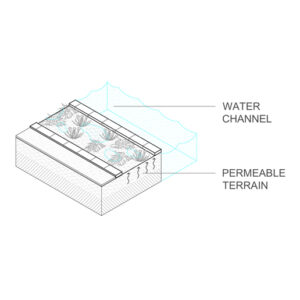
Rain gardens are shallow vegetated depressions designed to collect and temporarily store stormwater runoff from roofs, streets and other impervious surfaces. Water is filtered through vegetation and engineered soil before infiltrating into the ground or being discharged through an underdrain.
They reduce local runoff and peak discharge while integrating stormwater management with vegetation, biodiversity and landscape design.
Image
Please download the PDF to have the information sent directly to your email address.
Healthcare Waste Insulation
Send download link to:
Implementation Guide
- Assess contributing runoff, soil permeability, groundwater conditions and available space
- Size the rain garden according to the design rainfall and contributing catchment
- Provide a shallow storage area with suitable engineered soil and flood- and drought-tolerant vegetation
- Incorporate a gravel drainage layer and underdrain where natural infiltration is insufficient
- Protect inlets against erosion and provide a safe overflow route for events exceeding the design capacity
- Periodically maintain vegetation and remove accumulated sediment and debris
Benefits and Limitations
Benefits
- Reduces local runoff and peak stormwater discharge
- Provides temporary water storage, filtration and infiltration where conditions allow
- Improves stormwater quality by retaining sediments and pollutants
- Adds vegetation, biodiversity and landscape value
Limitations
- Has limited storage capacity during extreme rainfall events
- Requires sufficient surface area and appropriate hydraulic design
- Poorly permeable soils may require an underdrain or controlled outlet
- Vegetation, sediment and drainage components require regular maintenance
- Performance can decrease if inlets, soil or drainage layers become clogged
Parameter and data
Design: Shallow vegetated depression sized according to contributing runoff and design rainfall, with temporary surface storage, engineered soil, protected inlet and safe overflow. Infiltration or controlled drainage is provided according to soil and groundwater conditions
Materials and Components:
- Engineered soil or filter media
- Flood- and drought-tolerant vegetation
- Mulch where appropriate
- Gravel drainage layer
- Optional underdrain
- Filter layer or geotextile where required
- Inlet erosion protection
- Overflow outlet
Application: Gardens, streetscapes, parking areas, residential developments and public spaces receiving runoff from nearby impervious surfaces
Ponding Depth: Typically 10–30 cm, depending on hydraulic design, available area and safety requirements
Advantages: Provides localized runoff attenuation, filtration and potentially infiltration while integrating stormwater management into landscaped areas
Maintenance: Medium: regular vegetation management, removal of sediment and debris, inspection of inlets and overflows, and verification of infiltration or underdrain performance
Environmental Impact: Low–Positive: limited construction requirements combined with improved stormwater management, vegetation, biodiversity and water-quality benefits. Imported soil, drainage materials and maintenance should nevertheless be considered
Applicability Criteria: Suitable for sites with available landscaped area receiving runoff from roofs, streets, parking areas or other impermeable surfaces. Natural infiltration requires suitable soil and groundwater conditions; where these are unfavorable, an underdrain or controlled discharge system can be incorporated
Expected Service Life: 20–30+ years for the main landscape and drainage system with appropriate maintenance. Vegetation, mulch and individual drainage components may require earlier renewal or replacement
Please download the PDF to have the information sent directly to your email address.
Healthcare Waste Insulation
Send download link to:





