Description
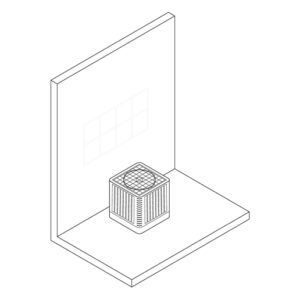
HVAC systems are highly vulnerable to flood damage when equipment, controls and distribution networks are located below the expected water level. Flooding can cause equipment failure, corrosion, contamination of ducts and prolonged operational disruption.
This measure focuses on elevating or relocating critical HVAC components, minimizing flood-exposed distribution systems and protecting ventilation openings to reduce damage, contamination and post-flood recovery time.
Image
Please download the PDF to have the information sent directly to your email address.
Healthcare Waste Insulation
Send download link to:
Implementation Guide
- Elevate or relocate critical HVAC equipment and controls above the design flood level where feasible
- Minimize ducts, pipework and electrical components below flood level and use corrosion-resistant, non-absorbent and cleanable materials where exposure cannot be avoided
- Elevate or protect outdoor-air intakes and exhaust openings against water and debris ingress
- Provide secure structural supports and suitable flood protection for non-relocatable equipment
- Provide backup power for critical HVAC or ventilation functions where continuity is required
- Inspect, clean and, where necessary, replace flood-exposed components before restarting the system
Benefits and Limitations
Benefits
- Reduces HVAC equipment damage and replacement costs
- Reduces contamination of ducts and air-handling components
- Minimizes downtime and supports faster post-flood recovery
- Improves resilience of critical ventilation and environmental-control services
Limitations
- Retrofit may require significant structural, spatial and service modifications
- Relocation and protection measures can involve high initial costs
- Existing space constraints may limit elevation or relocation options
- Flood-exposed components may require cleaning, decontamination or replacement after an event
- HVAC operation may need to be suspended during flooding if safe operation cannot be ensured
Parameter and data
Design: Critical HVAC equipment and controls located above the design flood level where feasible; air intakes and exhausts elevated or protected; flood-exposed ducts, pipework and services minimized
Materials and Components:
- Elevated HVAC units and controls
- Corrosion-resistant supports and anchoring systems
- Protected ducts and pipework
- Non-absorbent and cleanable components
- Flood-resistant barriers or enclosures where appropriate
- Elevated or protected air intakes and exhausts
- Backup power for critical functions
Advantages: Reduces equipment damage and contamination, protects critical HVAC functions and improves post-flood recovery
Maintenance: Medium: periodic inspection of equipment, supports, protective elements, air intakes and exhausts, controls and backup systems, with additional checks following major flood events
Environmental Impact: Low–Medium: relocation, additional supports and protective components create additional material impacts, partially offset by reducing premature replacement of HVAC equipment after floods
Applicability Criteria: Suitable for flood-prone buildings with HVAC equipment, controls or distribution systems located at basement or ground-floor level
Expected service life: 15–25 years for major HVAC equipment and 20–40+ years for supports and permanent protective elements, depending on exposure and maintenance
Please download the PDF to have the information sent directly to your email address.
Healthcare Waste Insulation
Send download link to: