Description
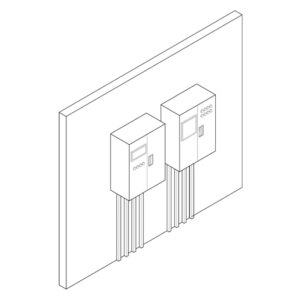
Electrical installations are highly vulnerable to flooding, which can cause short circuits, corrosion, equipment failure and serious safety hazards. Distribution boards, sockets, controls, cable connections and backup systems located at low levels are particularly exposed.
This measure focuses on locating critical electrical components above the design flood level, limiting exposure of circuits and connections, enabling safe isolation of flood-affected areas and protecting critical power systems to reduce damage and accelerate post-flood recovery.
Image
Please download the PDF to have the information sent directly to your email address.
Healthcare Waste Insulation
Send download link to:
Implementation Guide
- Identify electrical equipment and circuits exposed to the design flood level
- Elevate distribution boards, controls, sockets and critical equipment above the flood-risk zone where feasible
- Zone electrical circuits so flood-affected areas can be safely isolated without unnecessarily disconnecting unaffected areas
- Minimize low-level junctions and cable connections and protect unavoidable exposed components with suitable enclosures and sealed service entries
- Locate backup power, batteries and emergency electrical systems above the flood-risk zone
- Inspect and electrically test flood-exposed systems before re-energization
Benefits and Limitations
Benefits
- Reduces electrical damage, short-circuit and safety risks
- Protects critical electrical equipment and services
- Allows flood-affected circuits to be safely isolated
- Reduces repair costs and supports faster post-flood recovery
Limitations
- Retrofitting may require extensive rewiring and relocation of equipment
- Space and existing cable routes may limit elevation options
- Components exposed to floodwater may require replacement before reuse
- Backup and protection systems increase cost and technical complexity
Parameter and data
Design: Critical electrical equipment located above the design flood level where feasible; flood-exposed circuits independently isolatable; low-level connections minimized; cable and service entries appropriately protected
Materials and Components:
- Distribution boards and control panels
- Elevated sockets and electrical controls
- Electrical conduits and cables
- Protective enclosures and junction boxes
- Sealing systems for service penetrations
- Supports and anchoring systems
- Isolation and protection devices
- Backup power systems for critical services
Advantages: Protects critical electrical systems, enables safe isolation of flood-affected areas and reduces post-flood downtime and replacement needs
Maintenance: Medium: periodic electrical testing and inspection of distribution boards, enclosures, seals, connections and backup-power systems, with additional checks following major flood events
Environmental Impact: Low–Medium: targeted relocation, rewiring and protective components require additional materials, partially offset by reducing premature replacement of electrical equipment after floods
Applicability Criteria: Suitable for flood-prone buildings with distribution boards, sockets, controls or other electrical equipment located at basement or ground-floor level
Expected service life: 20–40 years, depending on the type of electrical components, exposure conditions and maintenance, with some protection and backup components requiring earlier replacement
Please download the PDF to have the information sent directly to your email address.
Healthcare Waste Insulation
Send download link to: