
Description
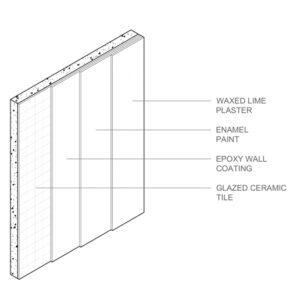
Flood-resilient interior wall finishes are water-resistant, low-absorption and easily cleanable surfaces used in areas that may be exposed to floodwater. Ceramic tiles, cementitious finishes and durable resin coatings can reduce moisture-related deterioration and allow walls to be cleaned, disinfected and returned to service after flooding.
Performance depends on the complete wall build-up, including the substrate, joints, adhesives and insulation, which should also be compatible with flood exposure and rapid drying.
Image
Please download the PDF to have the information sent directly to your email address.
Healthcare Waste Insulation
Send download link to:
Implementation Guide
- Identify wall areas within the expected flood zone
- Use moisture-resistant substrates and avoid absorbent or water-sensitive materials
- Apply washable, low-absorption finishes with water-resistant adhesives, grouts and sealants
- Detail joints, penetrations and wall–floor connections to facilitate cleaning and drying
- Avoid concealed cavities or materials that can retain contaminated water or moisture
- Inspect, clean and disinfect finishes after flooding before reoccupation
Benefits and Limitations
Benefits
- Reduces deterioration and replacement of internal wall finishes
- Allows easier cleaning, disinfection and drying after flooding
- Reduces post-flood waste, repair costs and recovery time
- Complements floodable and damage-tolerant building strategies
Limitations
- Does not prevent floodwater from entering the building
- Performance depends on the complete wall assembly, not only the surface finish
- Hidden absorbent materials or cavities may still require removal after flooding
- Some finishes, joints or sealants may require local repair after repeated exposure
Parameter and data
Design: Washable, low-absorption finish installed over a moisture-resistant and recoverable substrate, with joints and connections designed for cleaning, inspection and drying
Materials and Components:
- Ceramic tiles
- Cementitious render or coatings
- Durable resin coatings
- Cement boards or mineral substrates
- Water-resistant adhesives and grout
- Water-resistant sealants
Advantages: Easy cleaning and recovery, reduced material replacement and improved durability of flood-exposed internal walls
Maintenance: Low: routine cleaning and periodic inspection of joints, sealants and coatings, with local repair where damaged
Environmental Impact: Low–Medium: impacts depend on the selected finish and substrate, but durable and reusable wall systems can reduce post-flood demolition, material replacement and waste generation
Applicability Criteria: Suitable for basements, ground floors and other internal spaces designed for occasional or controlled flood exposure. Most effective when combined with moisture-resistant substrates and other flood-resilient materials throughout the wall assembly
Expected service life: 20–40+ years, depending on the finish system, substrate, frequency of flood exposure and maintenance
Please download the PDF to have the information sent directly to your email address.
Healthcare Waste Insulation
Send download link to:





