
Description
Green roofs are vegetated roofing systems designed to retain rainfall within the growing medium and vegetation, reducing peak runoff and delaying discharge to drainage networks. Part of the retained water is subsequently released through drainage or returned to the atmosphere through evapotranspiration.
They provide stormwater-management benefits while adding vegetation and biodiversity without occupying additional ground-level space.
Image
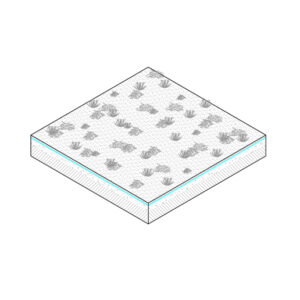
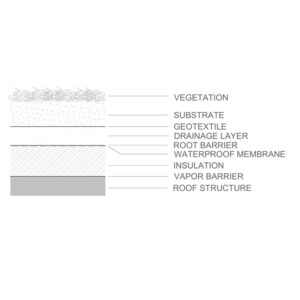
Please download the PDF to have the information sent directly to your email address.
Healthcare Waste Insulation
Send download link to:
Implementation Guide
- Assess rainfall conditions and verify the structural capacity of the roof for saturated system loads
- Provide continuous waterproofing, root protection and suitable drainage and retention layers
- Select substrate depth and vegetation according to climate, retention objectives and roof conditions
- Protect roof drains and provide a safe overflow route for rainfall exceeding the retention capacity
- Provide irrigation where required, particularly during vegetation establishment
- Regularly inspect vegetation, drainage outlets and waterproofing interfaces
Benefits and Limitations
Benefits
- Reduces and delays stormwater runoff from roof surfaces
- Reduces pressure on downstream drainage systems
- Uses roof space without occupying additional land
- Provides additional biodiversity, landscape and heat-mitigation benefits
Limitations
- Adds permanent load to the roof structure
- Retention capacity is limited and depends on substrate, vegetation and rainfall conditions
- Requires reliable waterproofing and drainage detailing
- Vegetation and drainage systems require regular maintenance
- Irrigation may be required depending on climate and plant selection
Parameter and data
Design: Vegetated roof system with growing medium and drainage/retention layers designed to temporarily retain rainfall, with structural capacity verified for saturated loads and safe drainage and overflow provided for excess water
Materials and Components:
- Waterproof membrane
- Root barrier
- Protection layer
- Drainage and water-retention layer
- Filter layer
- Lightweight growing substrate
- Vegetation
- Irrigation system where required
- Roof drains and overflow outlets
Advantages: Combines stormwater retention and delayed runoff with vegetation, biodiversity and additional environmental benefits without requiring ground-level space
Maintenance: Medium: regular vegetation care, drain and overflow cleaning, irrigation checks where installed, and periodic inspection of accessible waterproofing interfaces
Environmental Impact: Low–Medium: additional growing media, drainage layers and vegetation require materials and maintenance, while reduced runoff, biodiversity and reduced roof-surface temperatures provide environmental benefits
Applicability Criteria: Suitable for flat or low-slope roofs with adequate structural capacity, reliable waterproofing and safe drainage and overflow. Particularly appropriate in urban areas where ground-level space for stormwater management is limited
Expected Service Life: 30–50+ years for the main roof system, depending on waterproofing, design quality, exposure and maintenance. Vegetation, irrigation, drainage components and individual layers may require earlier maintenance or renewal
Please download the PDF to have the information sent directly to your email address.
Healthcare Waste Insulation
Send download link to:





