Description
Blue roofs are flat or low-slope roofing systems designed to temporarily store rainfall and release it gradually through controlled drainage outlets. Water can be retained directly on the roof or within dedicated storage layers, reducing peak runoff and delaying discharge to drainage networks.
They are particularly suitable for dense urban areas where ground-level stormwater storage is limited and can also be combined with green roofs or rainwater-reuse systems.
Image
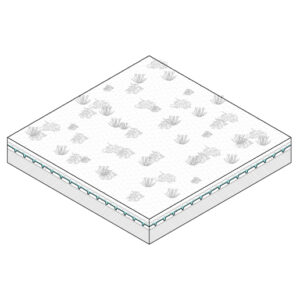
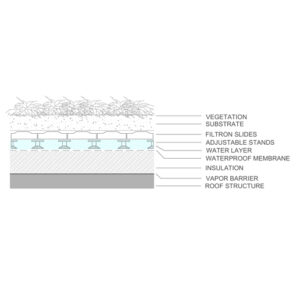
Please download the PDF to have the information sent directly to your email address.
Healthcare Waste Insulation
Send download link to:
Implementation Guide
- Assess rainfall, required storage volume and allowable discharge rate
- Verify the structural capacity of the roof for the maximum stored-water load
- Provide reliable waterproofing, protection and dedicated storage areas or layers
- Install flow-control outlets and emergency overflows above the design storage level
- Ensure water is retained only within designated areas and can drain safely after the event
- Provide accessible drains, outlets and storage components for regular inspection and cleaning
Benefits and Limitations
Benefits
- Reduces peak stormwater discharge and delays runoff
- Uses roof space without occupying additional land
- Reduces pressure on downstream drainage systems
- Can be combined with green roofs or rainwater-reuse strategies
Limitations
- Adds temporary water loads to the roof structure
- Depends on reliable waterproofing and correctly functioning drainage controls
- Blocked outlets can cause excessive or uncontrolled water accumulation
- Requires regular inspection and maintenance of drains and overflow systems
- Storage capacity can be exceeded during rainfall events beyond the design conditions
Parameter and data
Design: Flat or low-slope roof with temporary stormwater storage sized according to design rainfall and allowable discharge rate, with verified structural capacity, controlled outlets and independent emergency overflow
Materials and Components:
- Waterproof membrane
- Protection layer
- Storage trays or void-forming modules
- Flow restrictors or controlled outlets
- Roof drains
- Emergency overflow outlets
- Inspection and maintenance access
Advantages: Provides stormwater attenuation and delayed discharge without additional land occupation, making effective use of roof space in dense urban environments
Maintenance: Medium: periodic inspection and cleaning of drains, flow-control devices, overflows and storage components, together with checks of accessible waterproofing and additional inspection after major rainfall events
Environmental Impact: Low–Medium: additional waterproofing, storage modules and drainage components create material impacts, partially offset by reduced peak runoff and pressure on conventional drainage infrastructure
Applicability Criteria: Suitable for flat or low-slope roofs with adequate structural capacity, reliable waterproofing and safe controlled drainage and emergency overflow. Particularly appropriate for dense urban sites where ground-level stormwater storage is limited
Expected Service Life: 20–30+ years for the main waterproofing system, depending on membrane type, exposure and maintenance. Storage modules, flow-control devices and drainage components may have different service lives and can require earlier maintenance or replacement
Please download the PDF to have the information sent directly to your email address.
Healthcare Waste Insulation
Send download link to: