
Description
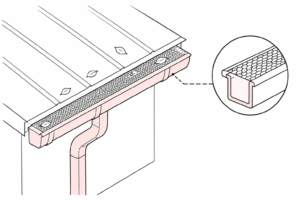
Non-combustible gutters and gutter guards reduce the likelihood that roof-edge drainage becomes an ignition point. Dry leaves and needles trapped in gutters can ignite from embers and expose fascia, soffits and roof edges to sustained flame.
The measure combines durable non-combustible gutter materials with guards that reduce debris entry while preserving drainage capacity.
Image
Please download the PDF to have the information sent directly to your email address.
Healthcare Waste Insulation
Send download link to:
Implementation Guide
- Use metal or other non-combustible gutter and downpipe components
- Install guards compatible with rainfall intensity, roof pitch and local vegetation
- Detail the roof edge so burning debris cannot readily expose combustible fascia or soffits
- Provide accessible inspection and cleaning points
- Avoid gaps between guard systems and roof coverings that can trap embers
- Maintain safe overflow routes if gutters become blocked
- Increase cleaning frequency during leaf fall and wildfire season
Benefits and Limitations
Benefits
- Low-cost reduction of a common roof-edge ignition source
- Supports ember-resistant roof design
- Reduces routine debris accumulation
- Suitable for retrofit
- Avoids adding combustible material at the roof edge
Limitations
- Fine debris can still pass through guards
- Blocked guards may reduce drainage
- Does not prevent embers landing elsewhere
- Requires recurring cleaning
- Some guards may be unsuitable for heavy snow or rainfall conditions
Parameter and data
Application: Pitched roofs and eaves exposed to leaf, needle or debris accumulation
Preferred Materials: Galvanised steel, stainless steel, aluminium or other non-combustible systems
Guard Types: Perforated metal covers, expanded-metal screens or other non-combustible debris guards
Drainage: Hydraulic capacity must not be compromised and safe overflow must remain available
Interfaces: Coordinate with fascia, soffit, underlay and edge flashings
Expected Service Life: Metal gutters commonly 20-40+ years depending on exposure
Maintenance: Seasonal cleaning, storm inspection, corrosion checks and fine-debris removal
Indicative Regulatory References: National roofing/drainage requirements and wildfire guidance. No single harmonised EU wildfire gutter standard applies universally
Please download the PDF to have the information sent directly to your email address.
Healthcare Waste Insulation
Send download link to:





