
Description
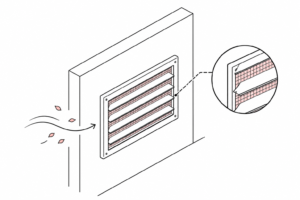
Ember-resistant vents allow required airflow while reducing penetration of wind-driven embers, flames and hot gases into attics, crawl spaces and ventilated façade or roof cavities. Conventional grilles can create direct ember pathways.
Purpose-designed vents use baffles, tortuous paths, fine non-combustible screens or reactive components while maintaining envelope ventilation.
Image
Please download the PDF to have the information sent directly to your email address.
Healthcare Waste Insulation
Send download link to:
Implementation Guide
- Identify all exterior openings connected to attics, crawl spaces and ventilated cavities
- Specify tested ember- and flame-resistant vent assemblies where available
- Use non-combustible corrosion-resistant components
- Maintain required ventilation and moisture performance
- Locate vents away from likely fuel accumulation where feasible
- Provide cleaning access because screens and baffles can clog
- Inspect after wildfire exposure or building works
Benefits and Limitations
Benefits
- Limits ember entry into concealed combustible spaces
- Preserves required ventilation
- Passive and independent of electricity
- Applicable to roof, soffit, gable and façade vents
- Reduces risk of hidden ignition
Limitations
- Does not completely eliminate penetration of very small embers or hot gases
- Reduced free area may affect ventilation performance if not correctly sized
- Screens and baffles can clog and require periodic cleaning
- Performance depends on the tested vent configuration and installation quality
- Retrofitting complex roof or façade cavities may be difficult
Parameter and data
Application: Attic, soffit, ridge, gable, crawl-space and ventilated façade/roof openings
Construction Solutions: Baffled metal vents, labyrinth vents and purpose-designed ember-resistant assemblies
Materials: Stainless steel, galvanised steel, aluminium and mineral/intumescent components depending on product
Free Area: Sized to maintain required ventilation after accounting for screens and baffles
Ember Resistance: Use appropriate product evidence or recognised wildfire testing where available
Expected Service Life: Approximately 20-40 years for durable metal assemblies
Maintenance: Cleaning and inspection for blockage, corrosion, deformation and loss of seals/baffles
Indicative Regulatory References: National ventilation and fire-safety requirements; product evidence and wildfire test methods where available. EU-wide harmonised ember-vent requirements are not uniform
Please download the PDF to have the information sent directly to your email address.
Healthcare Waste Insulation
Send download link to:





