
Description
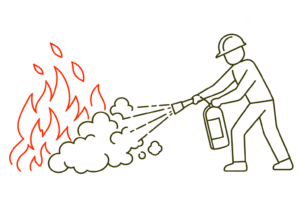
Portable fire extinguishing means provide first response to small, incipient fires before they grow beyond safe manual control. They include portable extinguishers and other small manual firefighting equipment.
In a wildfire context they can address small ember ignitions inside or immediately adjacent to the building, but occupants should never attempt firefighting when evacuation is the safer action.
Image
Please download the PDF to have the information sent directly to your email address.
Healthcare Waste Insulation
Send download link to:
Implementation Guide
- Select extinguisher type and rating for local fire classes and hazards
- Position equipment on accessible escape routes and near hazards without requiring movement toward the fire
- Provide clear signage and keep equipment unobstructed
- Train designated staff in safe use and in recognising when not to fight
- Do not rely on portable extinguishers for large exterior wildfire exposure
- Inspect pressure, seals, hose/nozzle and physical condition
- Service and replace units according to national rules and manufacturer instructions
Benefits and Limitations
Benefits
- Low-cost first-response capability
- Can extinguish small fires before automatic systems operate
- Flexible and independent of building utilities
- Useful for small ember ignitions
- Easy to deploy in many building types
Limitations
- Only effective for small accessible fires
- Requires a trained and willing user
- Incorrect extinguishing agent can be dangerous
- Can delay evacuation if users overestimate capability
- Requires periodic servicing and replacement
Parameter and data
Application: General occupied buildings and specific hazards requiring manual first response
Agents: Water, foam, powder, CO2, wet chemical or other agents selected according to the relevant fire class or hazard
Placement: Visible, accessible points on escape routes and near hazards as required
User Safety: Only where a clear escape path remains and the fire is small/incipient
Expected Service Life: Often 10-20+ years depending on type and inspection regime
Maintenance: Visual inspection, scheduled servicing, pressure/weight checks and replacement after discharge/expiry
Indicative Regulatory References: EN 3 series where applicable; national workplace/building fire-safety regulations
Please download the PDF to have the information sent directly to your email address.
Healthcare Waste Insulation
Send download link to:





