Description
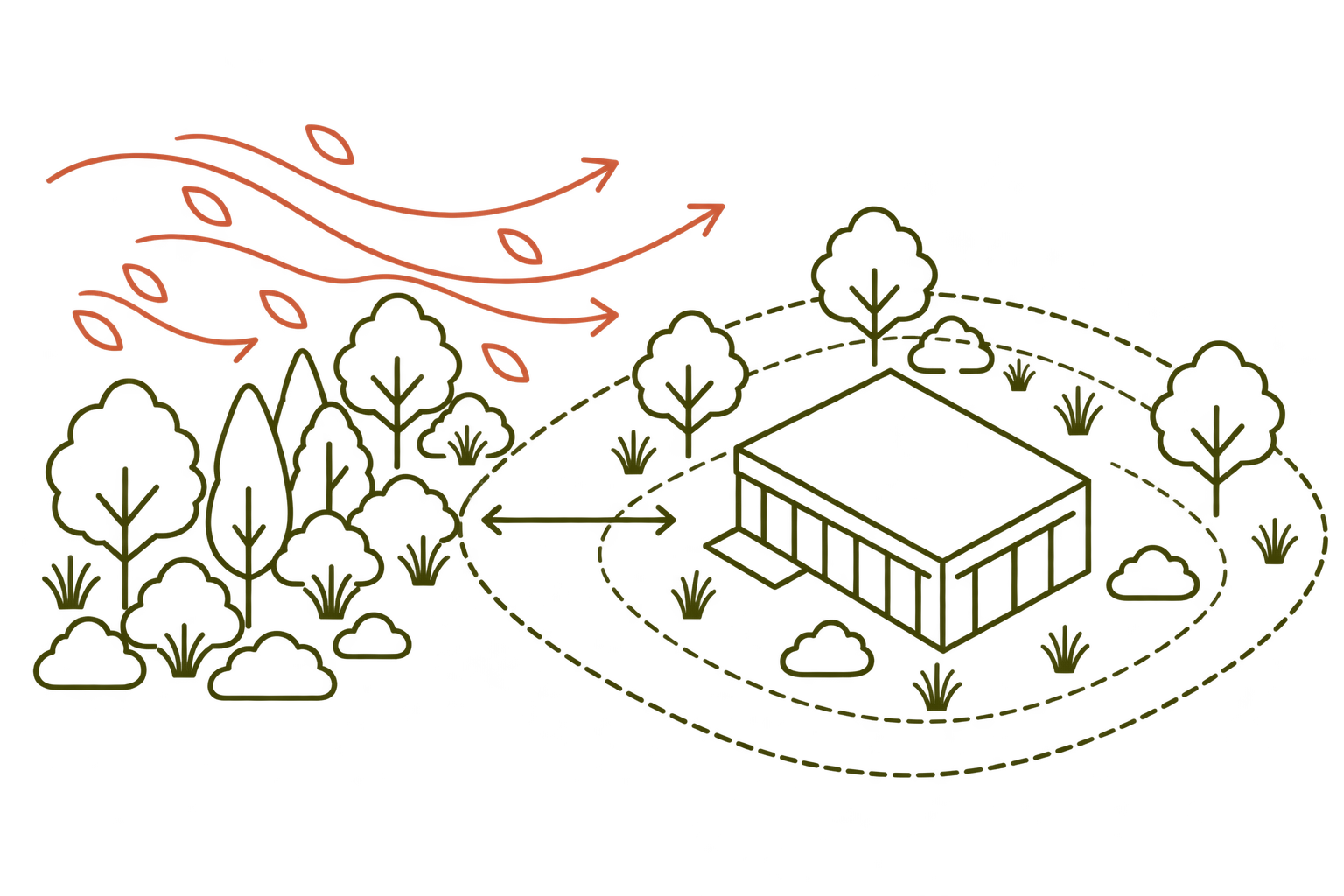
Vegetation management reduces the quantity, continuity and vertical arrangement of combustible fuels around buildings and access routes. It includes pruning, thinning, mowing, removal of dead vegetation and control of ladder fuels.
Unlike a one-time construction measure, fuel reduction requires recurring intervention because vegetation grows back and dry biomass accumulates. Maintenance intensity is therefore high even when initial cost is moderate.
Image
Please download the PDF to have the information sent directly to your email address.
Healthcare Waste Insulation
Send download link to:
Implementation Guide
- Map vegetation types, dead fuels, dense shrub layers and ladder-fuel conditions around the site
- Remove dead trees, branches, dry grasses and organic litter according to ecological and local rules
- Thin dense shrubs and separate tree canopies where appropriate
- Prune lower branches to reduce transition from surface fire to canopy fire
- Prioritise areas adjacent to buildings, evacuation routes, emergency access and utilities
- Use low-flammability planting strategies where appropriate
- Schedule repeated maintenance before and during the local fire season
Benefits and Limitations
Benefits
- Reduces available fuel and potential flame intensity
- Improves defensible space and fire-service access
- Reduces ember production from nearby vegetation
- Can target the highest-risk site zones
- Can provide landscape-management co-benefits when ecologically planned
Limitations
- Requires frequent recurring labour
- Over-clearing can create erosion or biodiversity impacts
- Regrowth can rapidly restore hazard
- Effectiveness depends on adjacent land
- Extreme wind-driven fire can overwhelm treated vegetation
Parameter and data
Application: Landscape, gardens, site boundaries, access roads and buffer areas in wildfire-prone sites
Actions: Pruning, thinning, mowing, dead-fuel removal, ladder-fuel reduction and management of combustible mulch/litter
Timing: Seasonal and risk-based; frequency depends on climate, species and growth rate
Ecology: Avoid indiscriminate clearing; coordinate with habitat, erosion and water-management objectives
Expected Service Life: Ongoing management action with no fixed service life
Maintenance: High: repeated cutting, pruning, removal and monitoring are intrinsic to the measure
Indicative Regulatory References: Regional/national wildfire vegetation-management rules, environmental requirements and local fire-service guidance
Please download the PDF to have the information sent directly to your email address.
Healthcare Waste Insulation
Send download link to: