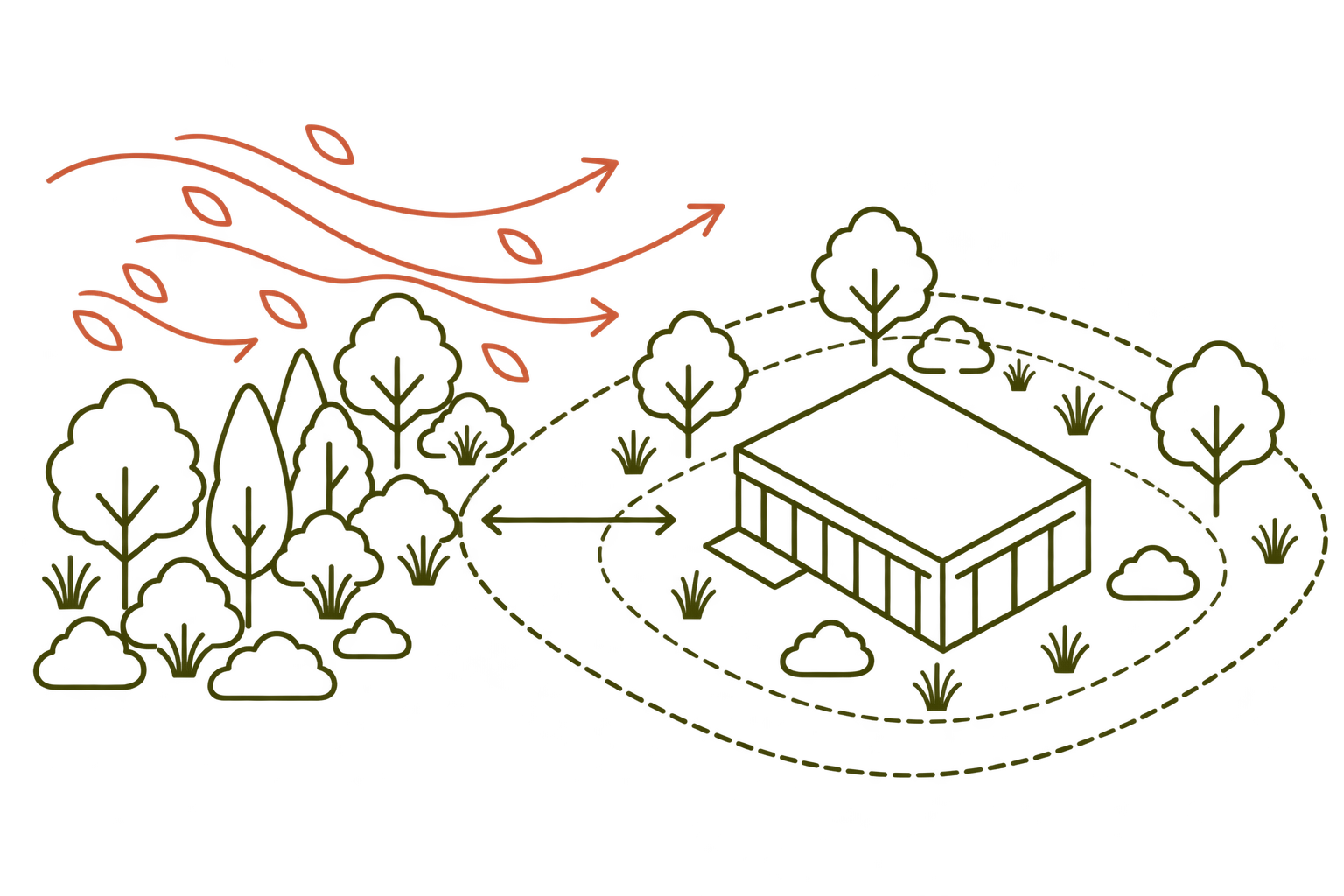
Description
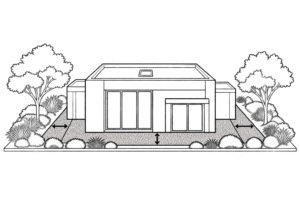
A non-combustible perimeter strip creates an immediate zone around the building with little or no combustible vegetation, mulch, furniture or stored material. It prevents embers landing beside the façade from igniting fuels that can expose windows, doors, cladding, eaves or decks to sustained flame.
The required width should follow regional wildfire guidance and site exposure. External guidance often uses about 1.5 m / 5 ft as a near-building benchmark, but this is not a universal European requirement.
Image
Please download the PDF to have the information sent directly to your email address.
Healthcare Waste Insulation
Send download link to:
Implementation Guide
- Replace combustible mulch and dense planting beside vulnerable façades with gravel, paving, concrete or other non-combustible treatment
- Extend treatment beneath low windows, vents, decks, balconies and eaves where ignition could expose the building
- Avoid firewood, bins, gas cylinders, plastic furniture or combustible fences directly against the building
- Provide drainage so hardscape does not create water problems at the façade
- Use breaks where combustible fences or landscape elements approach the building
- Keep the strip free of leaf litter and wind-blown debris
- Coordinate accessibility and landscape design so the zone remains maintainable
Benefits and Limitations
Benefits
- Strongly reduces immediate ember-to-fuel ignition risk
- Low operational complexity
- Can be integrated into paving and access design
- Reduces flame contact with lower façade and openings
- Works well with defensible space and debris management
Limitations
- Still requires regular debris removal
- May conflict with landscape preferences
- Does not address taller vegetation farther away
- Combustible furniture or storage can negate the benefit
- Indicative widths from non-European guidance are not automatically applicable
Parameter and data
Application: Immediate building perimeter, especially below vulnerable openings, eaves, decks and façade zones
Materials: Gravel, stone, concrete, ceramic/mineral paving or other non-combustible surfaces
Width: Project and jurisdiction specific. External guidance often uses about 1.5 m as a near-building benchmark; verify local requirements
Combustible Exclusions: Avoid mulch, dense shrubs, stored fuel, timber piles and combustible furniture within the designated strip
Expected Service Life: Hardscape 20-50+ years depending on material; landscape configuration requires ongoing control
Maintenance: Remove leaves/needles, control weeds, inspect stored items and repair paving/drainage
Indicative Regulatory References: Regional/national wildfire guidance and local landscape/fire-service requirements. Distances must be verified locally
Please download the PDF to have the information sent directly to your email address.
Healthcare Waste Insulation
Send download link to: