Description
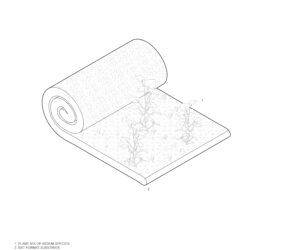
Extensive green roof mats are lightweight pre-grown vegetated systems composed of drought-tolerant species such as sedums, mosses and low-growing herbs installed over a shallow growing medium.
They provide rapid vegetation coverage with limited structural load and can reduce roof surface temperatures through shading and evapotranspiration while also providing moderate stormwater retention.
Image
Please download the PDF to have the information sent directly to your email address.
Healthcare Waste Insulation
Send download link to:
Implementation Guide
- Verify roof structural capacity and waterproofing condition
- Install mats over compatible waterproofing and root-protection layers
- Ensure continuous drainage and avoid uncontrolled ponding
- Select vegetation according to climate and solar exposure
- Provide irrigation during establishment and prolonged drought where required
- Inspect vegetation, drainage and protective layers periodically
Benefits and Limitations
Benefits
- Lightweight system suitable for roofs with limited load capacity
- Provides rapid and immediate vegetation coverage
- Reduces roof surface temperatures during hot periods
- Provides moderate stormwater retention and runoff delay
- Requires relatively low maintenance
Limitations
- Lower water-retention capacity than deeper green roof systems
- Limited plant diversity due to shallow substrate depth
- Performance depends strongly on climate and water availability
- Irrigation may be required during prolonged drought
- Exposure to extreme wind or drought can reduce durability if poorly detailed
Parameter and data
Design Lightweight extensive green roof system using pre-grown vegetation mats over a shallow substrate and appropriate drainage and waterproofing layers
The system should be designed according to saturated weight, roof slope, drainage capacity, wind exposure and local climate
Materials and Components
- Pre-grown sedum, moss or herb mats
- Biodegradable or synthetic carrier layer depending on system
- Lightweight growing substrate
- Root barrier
- Drainage and water-retention layer
- Waterproofing membrane
- Irrigation system where required
Application Flat or mildly sloping roofs, particularly in retrofit projects or buildings with limited structural load capacity
Technical Properties
- Saturated weight: Approximately 25–40 kg/m²
- Substrate thickness: Approximately 20–40 mm
- Overall system thickness: Approximately 40–80 mm
- Water retention capacity: Approximately 15–30 l/m²
- Plant coverage: Approximately 85–95%
- Irrigation: Generally limited to establishment or prolonged drought periods, depending on climate
Thermal / Cooling Performance Reduces roof surface temperatures through vegetation shading and evapotranspiration, contributing to improved summer thermal comfort
Actual performance depends on vegetation health, substrate moisture, solar exposure, roof insulation and local climate
Operation Passive, with irrigation required only where climate and vegetation conditions make it necessary
Advantages Provides a very lightweight and rapidly installed green-roof solution that combines passive roof cooling, moderate stormwater retention and biodiversity benefits
Applicability Criteria Suitable for flat or mildly sloping roofs where structural capacity is limited and a lightweight green-roof solution is required
Most appropriate where drought-tolerant vegetation can survive with limited irrigation
Wind exposure, roof drainage and prolonged dry periods should be assessed during design
Expected Service Life Approximately 20–40 years, depending on climate, maintenance and system composition
Vegetation and individual system layers may require earlier localized renewal
Please download the PDF to have the information sent directly to your email address.
Healthcare Waste Insulation
Send download link to: