
Description
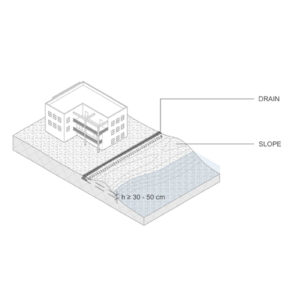
Landscape-integrated earthworks use slopes, berms and micro-topography to redirect, slow and temporarily retain surface runoff before it reaches vulnerable buildings or areas.
The strategy is particularly effective for pluvial flooding and can be integrated into landscape and green-infrastructure design to promote infiltration, reduce runoff velocity and manage water along controlled flow paths.
Image
Please download the PDF to have the information sent directly to your email address.
Healthcare Waste Insulation
Send download link to:
Implementation Guide
- Assess topography, runoff paths, soil conditions and expected flood or rainfall conditions
- Shape slopes, berms and depressions to redirect water away from vulnerable areas
- Design gradients and berm elevations according to hydraulic and geotechnical requirements
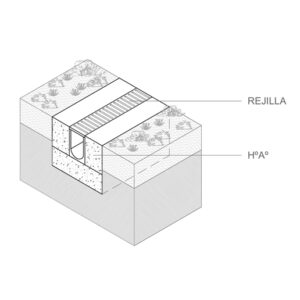
- Provide drainage or controlled overflow routes where infiltration is insufficient or design capacity is exceeded
- Stabilize exposed soils using vegetation, erosion-control systems or other suitable measures
- Inspect drainage paths, erosion and settlement after construction and major rainfall events
Benefits and Limitations
Benefits
- Reduces and delays surface runoff reaching buildings
- Provides a passive and relatively low-cost flood-resilience measure
- Can promote infiltration and reduce runoff velocity
- Integrates well with landscape, biodiversity and other green-infrastructure measures
Limitations
- Limited effectiveness during events exceeding the design capacity
- Requires sufficient external space and suitable topography
- Performance depends on soil stability, permeability and correct drainage design
- Poorly designed earthworks may cause erosion, ponding or redirect water toward other vulnerable areas
- Generally less effective for fluvial flooding unless combined with other measures
Parameter and data
Design: Terrain reshaping using slopes, berms and micro-topography designed according to site-specific runoff, hydraulic and geotechnical conditions, with controlled drainage and safe overflow routes where required. Indicative slopes and berm dimensions should be determined through project-specific design rather than applied as fixed values
Materials and Components:
- Compacted site soil or suitable fill
- Low-permeability soil layers where required
- Gravel drainage layers
- Geotextiles
- Perforated drainage pipes where required
- Vegetation
- Erosion-control mats or similar stabilization systems
Advantages: Passive, adaptable and relatively low-cost intervention that combines runoff management with landscape integration and limited operational requirements
Maintenance: Medium: vegetation management, repair of erosion or settlement, removal of sediment and debris, and inspection and cleaning of drainage and overflow routes after significant rainfall events
Environmental Impact: Low–Medium: earthmoving and imported materials can create site impacts, while reuse of local soils, vegetation, improved infiltration and biodiversity integration can reduce lifecycle and environmental impacts
Applicability Criteria: Suitable for sites with sufficient open space where topography can be modified to redirect and attenuate surface runoff. Particularly appropriate for pluvial flooding and overland-flow management. Soil stability, groundwater conditions and downstream flow paths should be assessed before implementation
Expected Service Life: 50+ years for the main earthworks, provided that slopes and berms remain stable and are properly maintained. Vegetation, drainage components and erosion-control elements may require periodic renewal or repair
Please download the PDF to have the information sent directly to your email address.
Healthcare Waste Insulation
Send download link to:





