Description
Cellulose fiber insulation is a thermal insulation material made mainly from recycled paper fibers treated with additives for fire, mould and pest resistance.
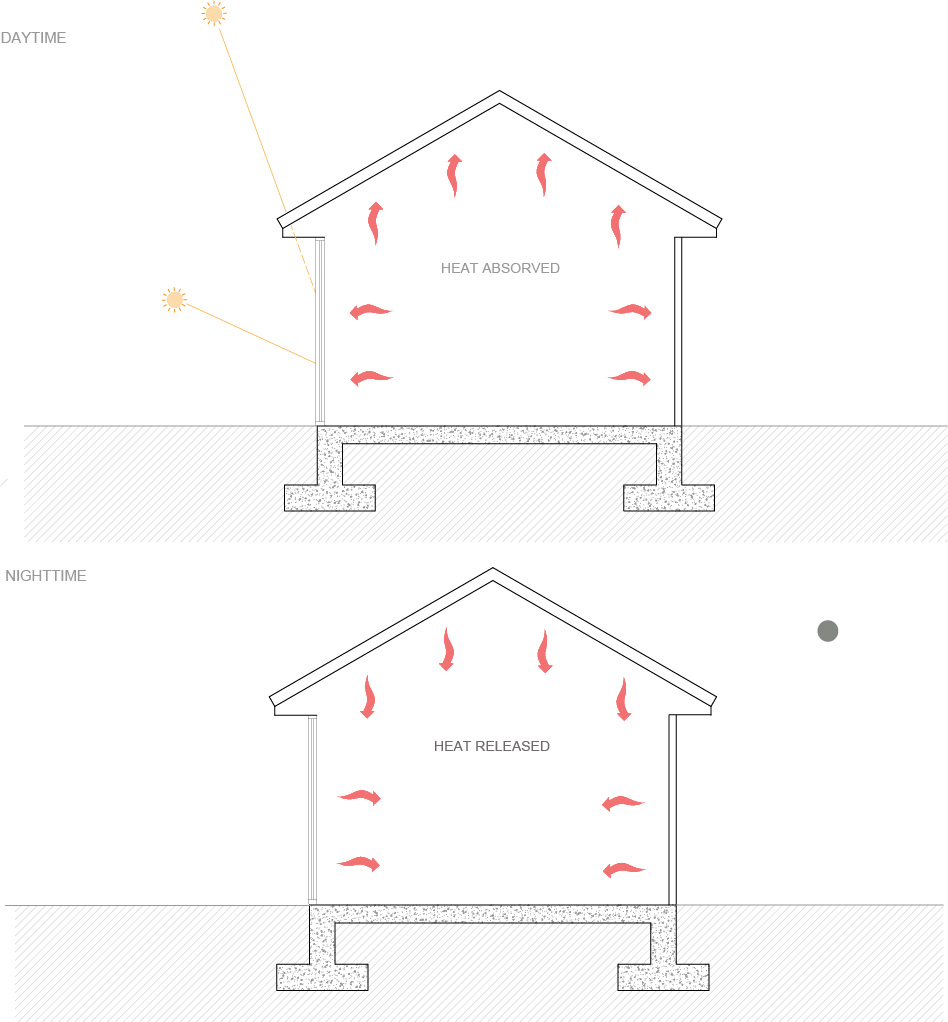
It is commonly installed as loose-fill, dense-pack or wet-spray insulation in walls, roofs and floors. During heatwaves, its thermal resistance and relatively high density help reduce conductive heat gains and improve thermal damping in lightweight building assemblies.
Image
Please download the PDF to have the information sent directly to your email address.
Healthcare Waste Insulation
Send download link to:
Implementation Guide
- Select the appropriate installation method according to the building element
- Ensure correct installed density to minimize settlement
- Maintain continuous insulation and avoid voids or air gaps
- Protect the material from bulk water and prolonged moisture
- Verify fire treatment and product certification
- Inspect after leaks or renovation works that may disturb the insulation
Benefits and Limitations
Benefits
- High recycled content and low embodied-energy potential
- Good thermal insulation and summer thermal damping
- Fills irregular cavities effectively
- Good acoustic performance
- Cost-effective compared with many bio-based insulation products
Limitations
- Sensitive to prolonged moisture and water ingress
- Can settle if installed at insufficient density
- Requires fire-retardant treatment
- Installation can generate dust and requires suitable protection
- Performance depends strongly on installation quality
Parameter and data
Design Thermal insulation system installed as loose fill, dense pack or wet spray, with density and thickness defined according to the required thermal performance and construction assembly. Continuity, airtightness and moisture control should be coordinated with the complete envelope system
Materials and Components
- Recycled paper fibers
- Borate or equivalent fire/mould/pest treatment
- Additives depending on product
- Airtight or vapor-control layers where required
Application Attics, roofs, timber-frame walls, cavity retrofits, floors and modular construction systems
Technical Properties
- Thermal conductivity: Approximately 0.037–0.045 W/m·K, depending on product and installed density
- Density:
- Loose fill: Approximately 25–45 kg/m³
- Dense-pack walls: Approximately 45–65 kg/m³
Key properties include: Thermal insulation, air-flow resistance, acoustic absorption, recycled content and hygroscopic moisture buffering
Thermal / Cooling Performance Reduces conductive heat transfer and improves thermal damping in lightweight roofs and walls
Heatwave performance depends on thickness, installed density, continuity and the thermal characteristics of the complete building envelope
Operation Passive, no operational energy input is required
Advantages Provides effective insulation and thermal damping using a high-recycled-content material that can fill irregular cavities and support low-carbon construction strategies
Applicability Criteria Suitable for roofs, walls, floors and cavity retrofits where continuous insulation can be achieved and moisture exposure can be controlled
Dense-pack installation is particularly suitable for vertical cavities where settlement must be minimized
Expected Service Life 30–50+ years, provided that the insulation remains dry, correctly installed and undisturbed
Please download the PDF to have the information sent directly to your email address.
Healthcare Waste Insulation
Send download link to: