Description
Wood fiber insulation is a bio-based thermal insulation material manufactured from wood fibers and available as flexible batts, rigid boards or blown-in products.
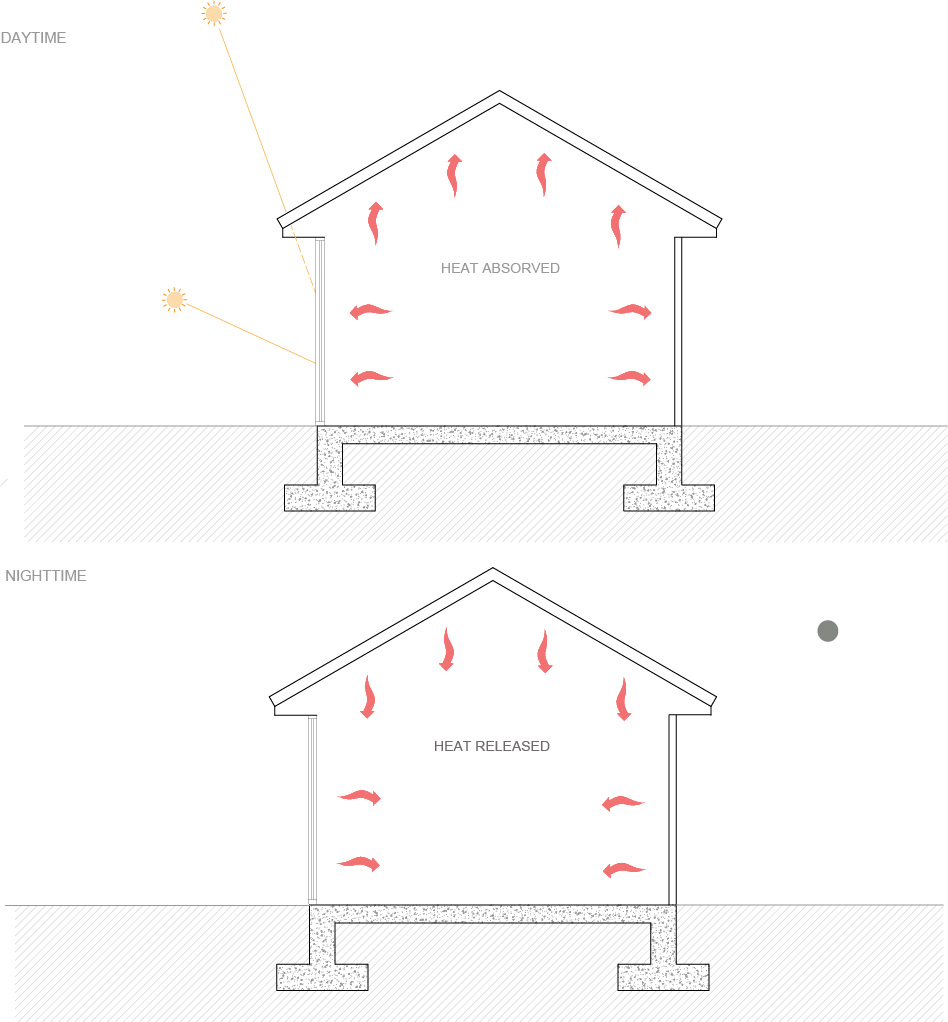
Its combination of low thermal conductivity, relatively high density and heat-storage capacity makes it particularly suitable for summer overheating control. During heatwaves, wood fiber insulation reduces conductive heat gains and can help delay and dampen temperature peaks through roofs and walls.
Image
Please download the PDF to have the information sent directly to your email address.
Healthcare Waste Insulation
Send download link to:
Implementation Guide
- Select the appropriate density and product format according to the building element
- Install continuously to minimize thermal bridges and air gaps
- Coordinate airtight, windtight and vapor-open layers with the complete envelope design
- Protect the material from prolonged wetting during construction and service
- Verify fire performance and façade compliance
- Combine with ventilated roofs or façades and external shading for stronger summer performance
Benefits and Limitations
Benefits
- Provides good thermal insulation and summer thermal damping
- Bio-based and renewable material with low-carbon potential
- Available in multiple formats for walls, roofs and façades
- Vapor permeable and suitable for moisture-buffering assemblies
- Provides good acoustic performance with low maintenance requirements
Limitations
- Requires careful moisture protection and detailing
- May require greater thickness than high-performance synthetic insulation
- Cost can be higher than some conventional insulation products
- Fire performance and façade compliance must be verified
- Performance depends on density, thickness and the complete building-envelope assembly
Parameter and data
Design Continuous insulation system designed according to the required thermal resistance, summer thermal performance and moisture behaviour of the complete building envelope
Rigid higher-density boards can be used where additional heat-storage capacity and structural robustness are beneficial
Materials and Components
- Wood fibers
- Binders depending on product
- Hydrophobic additives in some board products
- Flexible insulation batts
- Rigid or semi-rigid boards
- Blown-in wood fiber
- Protective membranes, renders or cladding depending on application
Application External wall insulation, ventilated façades, roofs, sarking boards, timber-frame infill and internal insulation
Technical Properties
- Thermal conductivity: Approximately 0.036–0.050 W/m·K, depending on product density and format.
- Density:
- Flexible products: Approximately 40–60 kg/m³
- Rigid boards: Approximately 110–270 kg/m³
Key properties include: Thermal insulation, heat-storage capacity, vapor permeability, acoustic absorption and bio-based content
Thermal / Cooling Performance Reduces conductive heat transfer through roofs and walls and can help delay and dampen summer temperature peaks
Heatwave performance depends on material thickness, density, insulation continuity and the characteristics of the complete envelope assembly
Operation Passive, no operational energy input is required
Advantages Combines thermal insulation, relatively high heat-storage capacity, vapor permeability and bio-based content, making it particularly suitable for summer comfort in lightweight or timber-based construction
Applicability Criteria Suitable for walls, roofs and façade systems where bio-based insulation, vapor permeability and summer thermal damping are priorities
Particularly effective in timber-frame and lightweight construction, provided that the material remains protected from prolonged moisture exposure
Expected Service Life 50+ years, provided that the insulation remains dry, protected and correctly integrated within the building envelope
Please download the PDF to have the information sent directly to your email address.
Healthcare Waste Insulation
Send download link to: