
Description
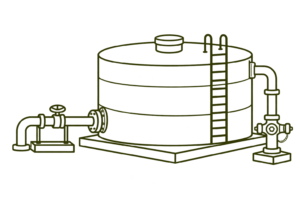
A dedicated fire-water storage tank reserves water for firefighting systems when the public supply is unavailable, insufficient or vulnerable to wildfire-related disruption. It can support sprinklers, hydrants, water monitors, external spray systems and fire-service connections.
Effective capacity must be derived from hydraulic demand and required duration rather than a generic volume.
Image
Please download the PDF to have the information sent directly to your email address.
Healthcare Waste Insulation
Send download link to:
Implementation Guide
- Calculate effective volume from design flow, simultaneous demand and required duration
- Prevent normal domestic or irrigation use from depleting the fire reserve
- Provide reliable suction conditions for fire pumps
- Install monitored low-water alarms and protected refill connections
- Protect the tank from wildfire exposure, freezing, contamination and impact
- Provide inspection access, overflow and drainage
- Coordinate with fire-service drafting/fill connections where required
Benefits and Limitations
Benefits
- Maintains firefighting capability during public-water failure
- Supports multiple active protection systems
- Provides predictable hydraulic reserve
- Valuable for remote or infrastructure-vulnerable sites
- Improves fire-service operational resilience
Limitations
- High space and capital requirements
- Requires structural foundation and protected location
- Water can stagnate or develop sediment/algae
- Large volumes may be required
- Pump and power availability remain essential
Parameter and data
Application: Sites where municipal fire-water flow/pressure is insufficient or resilience requires an independent reserve
Sizing: Project-specific hydraulic calculation based on design flow, duration and simultaneous demand
Tank Types: Steel, concrete, Glass-Reinforced Plastic (GRP) or other approved above-ground/below-ground reservoirs
Monitoring: Low-level alarm, overflow, refill status and pump suction supervision as required
Interfaces: Fire pumps, hydrants, sprinklers, water monitors and external spray
Expected Service Life: Concrete/steel tanks commonly 30-50+ years; liners/coatings and sensors may need earlier renewal
Maintenance: Internal inspection/cleaning, corrosion/coating checks, valve operation and water-quality management
Indicative Regulatory References: EN 12845 where the tank serves automatic sprinklers; national firefighting-water and structural requirements; fire-service or insurer criteria where applicable
Please download the PDF to have the information sent directly to your email address.
Healthcare Waste Insulation
Send download link to:





