
Description
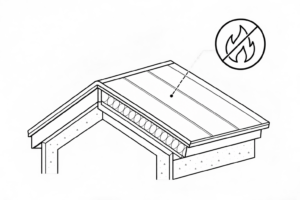
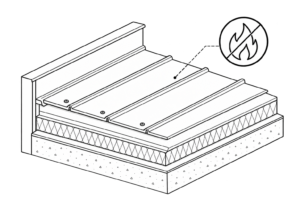
A non-combustible roof covering uses materials that make little or no contribution to fire when exposed to wildfire embers or external flame. Typical examples include metal sheet, slate, clay or concrete tile and other mineral coverings.
This measure focuses on the combustibility of the exposed covering and should be distinguished from the external-fire classification of the complete roof assembly.
Image
Please download the PDF to have the information sent directly to your email address.
Healthcare Waste Insulation
Send download link to:
Implementation Guide
- Select a non-combustible or very limited-combustibility covering appropriate to the roof system
- Use non-combustible ridge, verge and flashing components where feasible
- Close or protect gaps beneath tiles or sheet profiles against ember entry
- Coordinate the covering with a suitable underlay and fire-safe substrate
- Avoid exposed foam fillers or untreated timber details
- Inspect broken tiles, lifted sheets, corroded flashings and closures
- Combine with gutter/debris management and ember-resistant vents
Benefits and Limitations
Benefits
- Low fuel contribution at the most exposed building surface
- Durable passive protection
- Reduces likelihood of covering ignition
- Compatible with many conventional roof systems
- Can improve resilience without active systems
Limitations
- Does not guarantee the complete roof is fire resistant
- Embers may enter under tiles or profiles
- Underlays, insulation and framing may still be combustible
- Debris on top of the covering can burn
- Complex details can remain vulnerable
Parameter and data
Application: Exposed roof surfaces in wildfire-prone areas
Typical Materials: Steel, aluminium, zinc, copper, slate, clay tile, concrete tile and other mineral coverings
Reaction to Fire: Prefer non-combustible/limited-combustibility classifications appropriate to national requirements
Ember Detailing: Close profile ends, ridges, eaves and tile gaps where embers could reach underlays or framing
Expected Service Life: Metal/mineral coverings commonly 30-60+ years
Maintenance: Repair displaced/broken units, corrosion, open joints and debris accumulation
Indicative Regulatory References: EN 13501-1 for reaction to fire where applicable; EN 13501-5 for complete roof external-fire performance; national roofing requirements
Please download the PDF to have the information sent directly to your email address.
Healthcare Waste Insulation
Send download link to:





