
Description
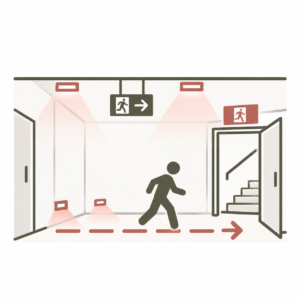
Safety lighting is emergency illumination dedicated to escape routes, open areas and critical safety locations. It ensures that exits, stairs, changes of direction and fire equipment remain identifiable when normal lighting fails.
For wildfire resilience, it is important because smoke infiltration and grid outages can occur before direct flame reaches the building.
Image
Please download the PDF to have the information sent directly to your email address.
Healthcare Waste Insulation
Send download link to:
Implementation Guide
- Design escape-route and anti-panic lighting to applicable emergency-lighting standards
- Place luminaires at exits, stairs, intersections, changes of level, refuge areas and fire equipment
- Provide automatic activation on loss of normal power
- Use self-contained batteries or a central emergency supply with sufficient autonomy
- Coordinate illuminated exit signage with the same power strategy
- Provide monitoring where appropriate in large buildings
- Perform functional and full-duration tests at scheduled intervals
Benefits and Limitations
Benefits
- Maintains visibility during power loss
- Reduces falls, disorientation and panic
- Improves recognition of exits and escape paths
- Assists emergency responders
- Provides resilience during wildfire-related utility shutdowns
Limitations
- Does not protect against smoke or flame spread
- Battery capacity deteriorates with age and temperature
- Poor maintenance can leave systems non-functional
- Dense smoke may still reduce visibility
- Large systems may require central monitoring
Parameter and data
Application: Escape routes, open areas, stairs, corridors, lobbies, exits and refuge areas
System Types: Self-contained emergency luminaires, central-battery systems and illuminated exit signs
Activation: Automatic on loss of normal supply
Illumination: Common benchmark: minimum 1 lux along escape-route centre line under EN 1838, subject to current national implementation
Autonomy: Typically 1-3 hours depending on building use and national requirements
Components: LED luminaires, batteries, chargers, control modules and monitoring systems
Expected Service Life: Luminaires often 10-20 years; batteries typically 4-10 years
Maintenance: Periodic functional testing, full-duration testing, battery condition checks, luminaire cleaning, fault monitoring and replacement of batteries or damaged components
Indicative Regulatory References: EN 1838; EN 50172; EN ISO 7010; EN 60598-2-22 where applicable; national fire-safety regulations
Please download the PDF to have the information sent directly to your email address.
Healthcare Waste Insulation
Send download link to:





