Description
Posidonia insulation is a bio-based thermal insulation material produced from dead leaves or fibers of Posidonia oceanica, typically collected as beach-cast biomass where legally and environmentally permitted.
After cleaning, drying and processing, the material can be used as loose-fill insulation, mats, boards or bio-composite panels. During heatwaves, it reduces conductive heat gains through roofs and walls while supporting the circular use of locally available Mediterranean biomass.
Image
Please download the PDF to have the information sent directly to your email address.
Healthcare Waste Insulation
Send download link to:
Implementation Guide
- Confirm legal and ecological requirements for collecting beach-cast Posidonia
- Use only dead biomass and avoid disturbance of living seagrass meadows
- Clean and dry the fibers to remove sand, salts and contaminants
- Select loose-fill, mat or board format according to the construction system
- Protect the material from bulk water and allow the assembly to dry
- Verify fire performance and product certification before use
Benefits and Limitations
Benefits
- Uses a renewable local biomass resource in Mediterranean regions
- Provides thermal insulation and moisture-buffering capacity
- Potentially low embodied carbon
- Suitable for vapor-open construction assemblies
- Low maintenance when correctly protected
Limitations
- Supply is geographically limited and seasonal
- Collection depends on environmental and local regulations
- Salt content and biological stability require quality control
- Fire performance must be verified
- Less standardized than conventional insulation materials
Parameter and data
Design Bio-based insulation system using processed dead Posidonia fibers within roofs, walls or cavities
The construction assembly should provide protection from bulk water while allowing appropriate vapor diffusion and drying
Materials and Components
- Dried dead Posidonia oceanica leaves or fibers
- Plant-based binders where required
- Mineral additives depending on product
- Mats, loose-fill or board formats
- Protective membranes, boards or cladding depending on application
Application Roof insulation, wall cavities, timber-frame infill, thermal/acoustic panels and Mediterranean retrofit projects
Technical Properties
- Thermal conductivity: Approximately 0.044–0.076 W/m·K, depending on density, processing and binder
- Density: Approximately 150–290 kg/m³ for board products, while loose-fill density varies according to compaction
Key properties include: Thermal insulation, moisture buffering, acoustic absorption, vapor permeability and bio-based content
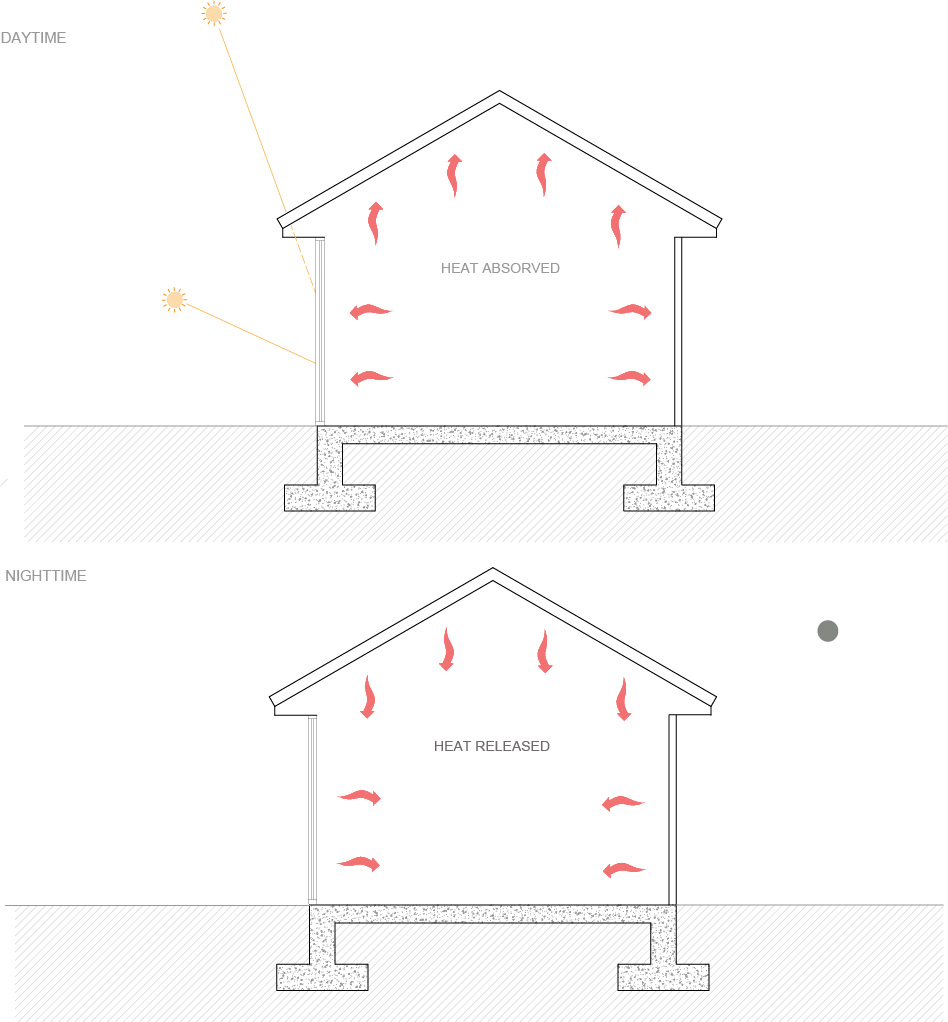
Thermal / Cooling Performance Reduces conductive heat transfer through walls and roofs. Heatwave performance depends on insulation thickness, density, continuity and the thermal characteristics of the complete envelope assembly
Operation Passive, no operational energy input is required
Advantages Provides thermal and acoustic insulation using a locally available bio-based resource that can support circular and low-carbon construction strategies in Mediterranean regions
Applicability Criteria Most suitable in Mediterranean regions where beach-cast Posidonia is legally available and can be collected without affecting living seagrass ecosystems
The material should be protected from bulk water, and fire, salt content and biological stability should be verified for the selected product
Expected Service Life 30–50 years, provided that the material remains dry, protected and biologically stable
Please download the PDF to have the information sent directly to your email address.
Healthcare Waste Insulation
Send download link to: