
Description
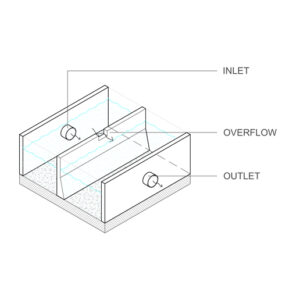
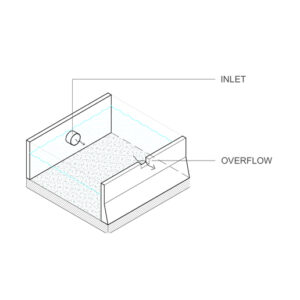
Detention basins and retention ponds are open stormwater-storage systems designed to temporarily store runoff, reduce peak discharge and release water gradually through controlled outlets. Detention basins are generally dry between rainfall events, while retention ponds maintain a permanent water volume.
Both systems can reduce pluvial flood risk and downstream drainage pressure while being integrated into landscape, public-space and biodiversity strategies.
Image
Please download the PDF to have the information sent directly to your email address.
Healthcare Waste Insulation
Send download link to:
Implementation Guide
- Assess catchment runoff, design rainfall and required attenuation volume through hydrological modelling
- Select detention or retention according to available space, groundwater conditions and landscape objectives
- Design storage depth, side slopes, controlled outlets and appropriate freeboard
- Provide erosion protection, sediment pre-treatment and a safe emergency overflow route
- Use vegetation adapted to wet and dry conditions and ensure safe public access where required
- Provide maintenance access and verify that downstream discharge does not increase flood risk elsewhere
Benefits and Limitations
Benefits
- Provides high stormwater-storage and runoff-attenuation capacity
- Reduces peak discharge and downstream flood risk
- Can improve water quality through sedimentation and vegetation
- Can provide landscape, biodiversity and public-space benefits
Limitations
- Requires significant land area
- Sediment accumulation can reduce storage capacity
- Performance depends on correctly designed outlets and emergency overflow
- Retention ponds require additional safety, water-quality and mosquito management
- High groundwater, contaminated soils or difficult topography may limit feasibility
Parameter and data
Design: Open storage system sized according to contributing runoff and design rainfall, with controlled discharge, appropriate freeboard and a safe emergency overflow. Side slopes are commonly around 1:3–1:6, subject to site-specific hydraulic, geotechnical and safety requirements
Materials and Components:
- Compacted earthworks
- Clay or geomembrane liner where required
- Inlet and outlet structures
- Flow-control devices
- Emergency overflow or spillway
- Riprap, gabions or other erosion protection
- Sediment forebay
- Vegetation
Advantages: High runoff-attenuation capacity with potential integration into landscape, biodiversity and multifunctional open spaces
Maintenance: Medium: periodic sediment removal, vegetation management and inspection of inlets, outlets, erosion protection and emergency overflow, particularly after major rainfall events
Environmental Impact: Low–Medium: excavation and land occupation create site impacts, while improved stormwater management, water quality and habitat creation can provide significant environmental benefits
Applicability Criteria: Suitable for sites with sufficient open space, appropriate topography and a safe downstream discharge route. Groundwater conditions, soil contamination, public safety and available maintenance access should be assessed before implementation
Expected Service Life: 30–50+ years for the main earthworks and hydraulic structures, depending on design, construction and maintenance. Vegetation, liners and flow-control components may require earlier renewal or replacement
Please download the PDF to have the information sent directly to your email address.
Healthcare Waste Insulation
Send download link to:





