
Description
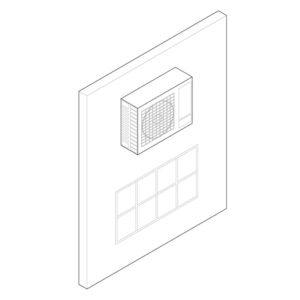
This measure consists of elevating critical building services and equipment above the design flood level while keeping them within their existing functional area. Equipment such as electrical panels, HVAC units, boilers and communication systems can be mounted on raised platforms, plinths or wall supports.
The strategy reduces direct flood exposure, equipment damage and post-flood downtime without requiring complete relocation of building services.
Image
Please download the PDF to have the information sent directly to your email address.
Healthcare Waste Insulation
Send download link to:
Implementation Guide
- Identify critical equipment located within the expected flood zone
- Elevate equipment above the design flood level with an appropriate safety margin
- Use structurally adequate platforms, plinths or wall-mounted supports with secure anchoring
- Maintain required access, ventilation, clearances and operating conditions
- Adapt pipework, cables and connections using suitable protected or flexible connections where required
- Inspect supports, fixings and equipment after installation and significant flood events
Benefits and Limitations
Benefits
- Protects critical equipment from direct floodwater exposure
- Reduces repair costs, service interruption and recovery time
- Provides a relatively simple and cost-effective retrofit measure
- Compatible with most other flood-resilience strategies
Limitations
- Does not prevent flooding of the surrounding space
- Available height and space may limit implementation
- Heavy equipment may require structural reinforcement
- Connections, pipework or cables remaining below flood level may still be vulnerable
- Not feasible for all equipment types or operational configurations
Parameter and data
Design: Critical equipment elevated above the design flood level with an appropriate safety margin, supported by structurally adequate and securely anchored platforms or fixing systems while maintaining required operating and maintenance clearances
Materials and Components:
- Concrete or steel platforms and plinths
- Wall-mounted brackets
- Structural supports
- Anchoring systems
- Flexible or extended service connections
- Protective enclosures where required
Advantages: Simple and targeted protection that reduces flood exposure of critical services with relatively limited intervention and good retrofit potential
Maintenance: Low: periodic inspection of structural supports, anchors, fixings, service connections and equipment condition, with additional checks following flood events
Environmental Impact: Low: generally requires limited additional materials and intervention, while reducing premature replacement of flood-damaged equipment
Applicability Criteria: Suitable for flood-prone buildings where critical equipment is located within the expected flood zone and sufficient vertical space and structural capacity are available. Not suitable where equipment cannot be safely elevated because of operational, structural, access or clearance requirements
Expected Service Life: 20–40+ years for platforms, supports and permanent adaptation elements, depending on material, exposure and maintenance. The service life of the protected equipment itself should be assessed separately
Please download the PDF to have the information sent directly to your email address.
Healthcare Waste Insulation
Send download link to:





