Description
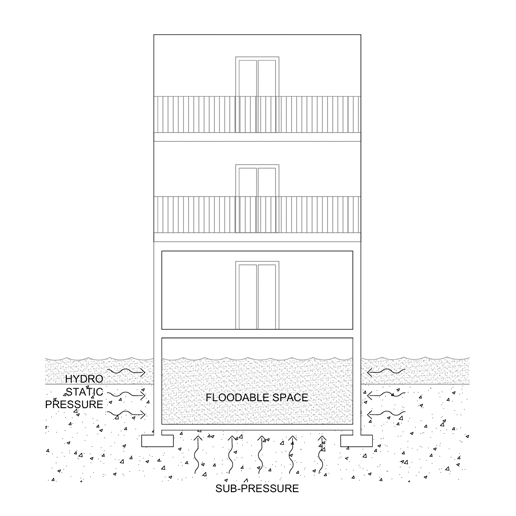
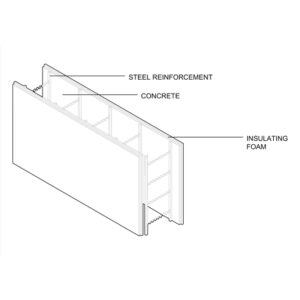
Insulated Concrete Forms (ICF) are permanent insulated formwork systems filled with reinforced concrete to create continuous structural walls. In flood-prone buildings, the reinforced concrete core can provide high resistance to hydrostatic loads, impacts and structural deterioration.
Flood resilience depends on the complete wall system, including waterproofing, drainage, sealed joints and penetrations, and protection of exposed insulation.
Image
Please download the PDF to have the information sent directly to your email address.
Healthcare Waste Insulation
Send download link to:
Implementation Guide
- Design the reinforced concrete core for expected hydrostatic, impact and other relevant flood loads
- Provide continuous waterproofing and coordinate it with foundations and adjacent construction
- Seal joints, openings and service penetrations against water ingress
- Provide drainage where required to limit hydrostatic pressure
- Protect exposed insulation with durable, water-resistant finishes
- Use flood-resilient interior finishes in areas expected to be exposed to water
Benefits and Limitations
Benefits
- Provides high structural resistance to flood loads and impacts
- Creates a durable and continuous structural wall system
- Combines structural resilience with high thermal performance
- Reduces deterioration and recovery needs when properly waterproofed and detailed
Limitations
- Requires additional waterproofing and careful detailing to achieve flood protection
- Higher initial cost than some conventional wall systems
- Requires specialized installation and quality control
- Exposed insulation and poorly sealed penetrations remain vulnerable
- EPS and concrete can result in relatively high embodied environmental impacts
Parameter and data
Design: Continuous reinforced concrete core within permanent insulated formwork, structurally designed for expected flood loads and integrated with waterproofing, drainage and sealed penetrations
Materials and Components:
- Expanded polystyrene (EPS) formwork panels or blocks
- Reinforced concrete
- Steel reinforcement
- Plastic or metal connectors
- Waterproof membranes or coatings
- Waterstops and sealants
- Protective exterior finishes
Application: Structural basement and ground-floor walls in new buildings and selected retrofit applications requiring high structural resistance and flood resilience
Thickness: Typically 20–40 cm, depending on the ICF system, structural requirements and insulation performance
Permeability: The reinforced concrete core has low permeability, but overall watertightness depends on concrete quality, waterproofing, joints, penetrations and construction detailing
Advantages: High structural strength, durability and thermal performance, with improved flood resilience when integrated with appropriate waterproofing and drainage
Maintenance: Low–Medium: periodic inspection of waterproofing, protective finishes, joints and service penetrations, particularly after major flood events
Environmental Impact: Medium–High: concrete and EPS contribute significant embodied impacts, although durability, thermal performance and reduced flood-related replacement may provide lifecycle benefits
Applicability Criteria: Suitable for new construction and selected retrofit applications in flood-prone areas requiring robust structural walls. Most effective when incorporated as part of an integrated flood-resilient envelope including waterproofing, drainage and protected openings
Expected service life: 50+ years for the structural wall system, depending on concrete durability, exposure and construction quality. Waterproofing, sealants and protective finishes
Please download the PDF to have the information sent directly to your email address.
Healthcare Waste Insulation
Send download link to: