
Description
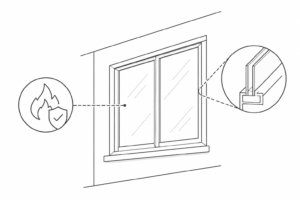
Fire-resistant windows are tested glazed assemblies designed to maintain integrity and, depending on classification, limit radiation and heat transfer for a defined period. They can protect compartment boundaries, escape routes or selected exterior openings.
The complete frame-glass-seal-wall interface is critical. Fire-resistant glass alone does not create a fire-resistant window if the frame, fixings or perimeter seals fail.
Image
Please download the PDF to have the information sent directly to your email address.
Healthcare Waste Insulation
Send download link to:
Implementation Guide
- Determine whether the opening requires E, EW or EI performance
- Specify a complete tested assembly including frame, glazing, beads, seals, fixings and perimeter details
- Coordinate the assembly with the actual supporting wall and opening size
- For openable units, ensure closing and locking are compatible with the tested configuration
- Avoid untested substitutions of glass, frame or sealant
- Consider external wildfire radiant heat together with compartment requirements
- Inspect seals, glazing damage, frame distortion and closing function
Benefits and Limitations
Benefits
- Protects vulnerable glazed openings against flame and heat
- Can maintain daylight while preserving compartmentation
- Supports protected escape routes
- Reduces fire spread through windows
- Passive when the tested configuration is maintained
Limitations
- Higher cost and weight than conventional glazing
- Size and operability options may be limited
- Performance is specific to the tested assembly
- Standard internal fire tests may not represent every wildfire exposure
- Damaged glazing or seals need specialist replacement
Parameter and data
Application: Fire compartments, protected corridors, stair enclosures and selected exterior openings
Materials: Fire-resistant glazing, steel/aluminium/timber fire-rated frames and intumescent seals
Installation: Complete tested system in a compatible wall and within tested dimensions/fixing arrangements
Expected Service Life: Approximately 20-40 years depending on frame, seals and glazing technology
Maintenance: Inspect cracks, seal degradation, frame corrosion/distortion and hardware
Indicative Regulatory References: EN 13501-2; EN 1634-1 where applicable; relevant product/assessment documentation; national fire requirements
Please download the PDF to have the information sent directly to your email address.
Healthcare Waste Insulation
Send download link to:





