
Description
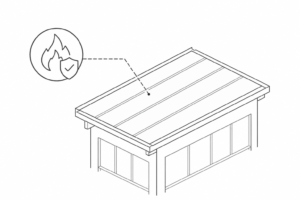
Fire-resistant roofing materials are roof coverings and assemblies with verified resistance to external fire exposure. Their role is to limit ignition, flame penetration and fire spread across the roof when exposed to embers or flames.
The required performance should be established for the complete roofing system and substrate, not only for a loose material sample.
Image
Please download the PDF to have the information sent directly to your email address.
Healthcare Waste Insulation
Send download link to:
Implementation Guide
- Determine the required external-fire roof classification from national rules and project risk
- Specify a roof system with evidence for the complete build-up
- Maintain continuity around rooflights, vents, chimneys and service penetrations
- Avoid exposed combustible underlays or insulation at edges and openings
- Coordinate waterproofing, drainage and wildfire hardening
- Protect roof-mounted equipment interfaces and cable penetrations
- Verify that later repairs use products compatible with the original fire performance
Benefits and Limitations
Benefits
- Reduces roof ignition and surface flame spread
- Provides passive protection against external fire
- Can be combined with ember-resistant detailing
- Suitable for new construction and reroofing
- Durable mineral or metal systems can have long service life
Limitations
- Classification is system-specific
- Penetrations and roof edges can remain vulnerable
- Combustible debris can still ignite on the roof
- Some systems have higher initial cost
- Standard testing does not reproduce every wildfire exposure
Parameter and data
Application: Pitched and low-slope roofs on buildings in wildfire-prone areas
Materials: Metal, clay/concrete tile, slate, mineral membranes and other systems with suitable external-fire evidence
Classification: External-fire roof classification according to EN 13501-5 using the applicable test method and national requirement
System Boundary: Roof covering, underlay/membrane, insulation and substrate where included in the classified assembly
Expected Service Life: Approximately 20-60+ years depending on material and roof system
Maintenance: Normal roof inspection plus debris removal and verification of penetrations, edges and repairs
Indicative Regulatory References: EN 13501-5; CEN/TS 1187 where applicable; Regulation (EU) 2024/3110 (CPR); national roof fire-performance requirements
Please download the PDF to have the information sent directly to your email address.
Healthcare Waste Insulation
Send download link to:





