
Description
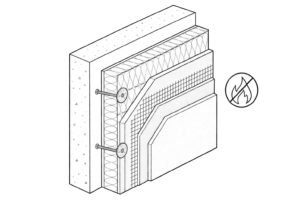
Non-combustible external insulation reduces the amount of combustible material within façade and roof build-ups. Mineral wool, cellular glass and other suitably classified mineral products can provide thermal performance while making little contribution to fire growth.
The insulation should still be treated as part of a complete envelope system because cladding, membranes, cavities and opening details remain important.
Image
Please download the PDF to have the information sent directly to your email address.
Healthcare Waste Insulation
Send download link to:
Implementation Guide
- Select insulation with reaction-to-fire performance appropriate to the building and national rules
- Install continuously while maintaining required cavity barriers and fire stops
- Protect insulation edges at windows, doors, parapets and roof interfaces
- Coordinate vapour and wind barriers so combustible membranes are not exposed
- Use compatible fixings and support systems
- Keep insulation dry during construction and service
- Inspect after façade damage or refurbishment
Benefits and Limitations
Benefits
- Reduces fuel contribution within the envelope
- Maintains thermal insulation and energy performance
- Compatible with ventilated and rendered façades
- Passive and low-maintenance once enclosed
- Can improve overall façade-fire robustness
Limitations
- Does not make combustible cladding or membranes safe by itself
- Some mineral products require greater thickness than foams
- Moisture protection remains necessary
- Existing façade replacement can be disruptive
- Complete-system compliance must still be demonstrated
Parameter and data
Application: External wall and roof insulation in new construction and retrofit
Typical Materials: Stone wool/mineral wool, cellular glass and other mineral insulation with suitable reaction-to-fire classification
Reaction to Fire: A1 or A2 products are widely available, but required class and complete-system performance must follow project/national rules
Interfaces: Protect insulation at openings, cavities, parapets and penetrations and coordinate with barriers/cladding
Expected Service Life: Typically 30-50+ years when protected from moisture and damage
Maintenance: Generally low; inspect envelope damage, water ingress and exposed insulation after works or incidents
Indicative Regulatory References: EN 13501-1; relevant insulation product standards under the CPR; national façade/roof fire requirements
Please download the PDF to have the information sent directly to your email address.
Healthcare Waste Insulation
Send download link to:





