
Description
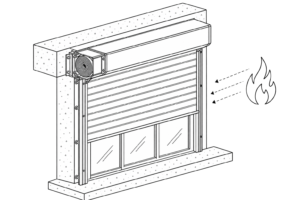
Fire-rated external shutters are tested closure systems that protect windows, doors or other openings for a defined period during fire exposure. In wildfire-prone areas they can reduce direct flame and radiant heat exposure to glazing and provide a secondary barrier to embers.
The shutter, guides, headbox, fixings, mechanism and supporting construction must be considered as a complete tested assembly.
Image
Please download the PDF to have the information sent directly to your email address.
Healthcare Waste Insulation
Send download link to:
Implementation Guide
- Identify openings where external flame or radiant exposure is significant
- Specify a shutter with the required fire-resistance classification and tested dimensions
- Install guides, headboxes, fixings and perimeter details according to system evidence
- Define fail-safe closure for power loss and integrate automatic closing only where compatible with certification
- Ensure shutters do not obstruct required evacuation exits
- Protect mechanisms from weather, corrosion and debris
- Test operation periodically and inspect after wildfire or high-wind exposure
Benefits and Limitations
Benefits
- Provides closure of vulnerable glazed openings
- Reduces flame, ember and radiant heat exposure
- Can complement fire-resistant or standard glazing
- Can be automated as part of a wildfire response sequence
- May offer security and solar-control co-benefits
Limitations
- High cost and architectural impact
- Moving mechanisms require maintenance
- Obstruction or power failure can prevent closing
- Must not compromise emergency egress
- Performance is limited to the tested assembly
Parameter and data
Application: External windows, doors and façade openings subject to the fire/wildfire strategy
System Types: Rolling or sliding shutters, fire curtains or rigid closures where tested
Classification: Fire-resistance classification according to EN 13501-2 based on relevant test evidence
Operation: Manual, motorised or automatic with defined fail-safe behaviour
Components: Curtain/slats or panel, guides, headbox, motor/gearbox, controls, fixings and seals
Expected Service Life: Main assembly approximately 15-30 years; motors/controls often 10-20 years
Maintenance: Operational tests, guide cleaning, corrosion checks and inspection of seals, fixings and controls
Indicative Regulatory References: EN 1634-1 where applicable; EN 13501-2; national fire-safety requirements; manufacturer tested-system documentation
Please download the PDF to have the information sent directly to your email address.
Healthcare Waste Insulation
Send download link to:





