
Description
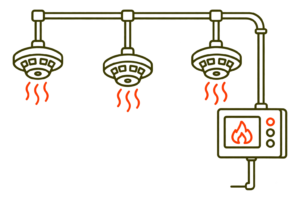
A fire detection system identifies signs of a developing fire and transmits signals to a fire alarm control panel and associated safety systems. It can combine smoke, heat, flame and multi-criteria detectors depending on the environment.
In wildfire-prone buildings, the strategy should recognise that external smoke may enter before there is an internal fire, so detector type, zoning and alarm logic should minimise nuisance alarms without delaying genuine detection.
Image
Please download the PDF to have the information sent directly to your email address.
Healthcare Waste Insulation
Send download link to:
Implementation Guide
- Develop detector selection and zoning from a fire-risk assessment
- Use smoke detection where early smouldering-fire detection is appropriate
- Use heat, flame or multi-criteria detection where smoke detection would create nuisance alarms
- Provide monitored control and clear alarm/fault zoning
- Interface with doors, dampers, smoke control, suppression and lifts according to the fire strategy
- Provide standby power and monitored circuits
- Test detectors, loops, interfaces and alarm transmission periodically
Benefits and Limitations
Benefits
- Provides early identification of internal fire
- Can trigger alarms and protective systems automatically
- Supports rapid investigation and responder action
- Allows zoning to locate events quickly
- Can be adapted to different environments
Limitations
- External wildfire smoke can cause nuisance alarms
- Different fire types require different detector technologies
- Dust and contamination affect sensitivity
- System complexity increases with interfaces
- Detection alone does not suppress fire
Parameter and data
Application: Occupied buildings, technical rooms, storage and special-risk areas
Detector Types: Optical smoke, heat, multi-sensor, aspirating, beam, flame and specialised gas detection
Control: Addressable or conventional control and indicating equipment with alarm/fault monitoring
Power Supply: Normal supply plus standby batteries or other compliant secondary supply
Interfaces: Alarm notification, door release, smoke control, suppression, lift recall and BMS/fire-service signalling
Expected Service Life: Control panels often 10-15+ years; detector replacement depends on manufacturer/environment
Maintenance: Functional tests, contamination checks, battery replacement and interface testing
Indicative Regulatory References: EN 54 series; EN 54-2 / EN 54-4 where applicable; national fire-alarm design and maintenance requirements
Please download the PDF to have the information sent directly to your email address.
Healthcare Waste Insulation
Send download link to:





