
Description
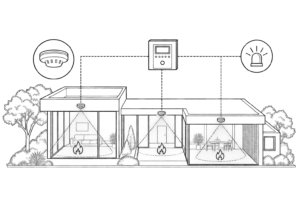
Flame detectors identify ultraviolet, infrared or combined optical signatures produced by open flames. They can respond very rapidly to exposed flaming fires and are useful in large outdoor or industrial areas where smoke may disperse before reaching conventional detectors.
In wildfire-related applications they can monitor fuel handling areas, yards, loading bays or critical external zones, but require direct optical visibility.
Image
Please download the PDF to have the information sent directly to your email address.
Healthcare Waste Insulation
Send download link to:
Implementation Guide
- Use flame detection where rapid open-flame detection is important and line of sight can be maintained
- Select UV, IR, UV/IR or multispectrum technology according to fuel and false-alarm environment
- Verify field of view and ensure critical hazards are not shadowed
- Avoid direct view of known interference sources
- Provide outdoor environmental protection where required
- Integrate with alarm, water monitor/deluge or shutdown only after cause-and-effect verification
- Clean optics and perform functional tests regularly
Benefits and Limitations
Benefits
- Very rapid response to exposed flames
- Can protect large open or outdoor areas
- Useful where smoke disperses quickly
- Can trigger automatic suppression or shutdown
- Suitable for high-risk industrial zones
Limitations
- Requires line of sight
- Higher cost than point smoke/heat detection
- Obstructions create blind spots
- Interference sources can cause false alarms
- Less effective for concealed or smouldering fires
Parameter and data
Application: Fuel storage, industrial yards, loading areas, large process spaces and high-risk external zones
Technologies: UV, IR, UV/IR and multispectrum IR flame detection
Coverage: Defined by field of view, range, fuel type and obstruction analysis
Interfaces: Alarm, process shutdown, water monitor/deluge or foam systems where justified
Expected Service Life: Typically 10-15+ years for electronics
Maintenance: Optical cleaning, functional tests, obstruction checks and interface testing
Indicative Regulatory References: EN 54-10 for flame detectors where applicable; national industrial fire-safety requirements; hazardous-area certification where required
Please download the PDF to have the information sent directly to your email address.
Healthcare Waste Insulation
Send download link to:





