
Description
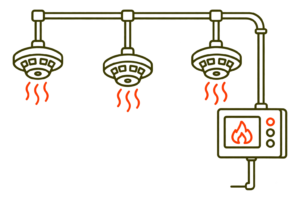
Heat detectors respond to a fixed temperature, a rate of rise or a combination of thermal criteria. They are useful where smoke detectors would be unreliable because of dust, steam, fumes or normal airborne particles.
They generally respond later than smoke detection to many fires, so selection should follow the fire risk and environment rather than convenience.
Image
Please download the PDF to have the information sent directly to your email address.
Healthcare Waste Insulation
Send download link to:
Implementation Guide
- Use heat detection where environmental conditions make smoke detection unsuitable
- Select fixed-temperature, rate-of-rise or combined class according to normal ambient conditions
- Position detectors to account for ceiling height and obstructions
- Avoid classes that could alarm during normal high-temperature operation
- Integrate with fire alarm and suppression where required
- Consider linear heat detection for long or inaccessible hazards where appropriate
- Test detectors and interfaces at scheduled intervals
Benefits and Limitations
Benefits
- Robust in dusty, steamy or smoky environments
- Lower nuisance-alarm risk in challenging spaces
- Simple and reliable
- Useful for plant rooms, garages and service spaces
- Can trigger alarms or suppression
Limitations
- Often slower than smoke detection
- May not detect smouldering fire early
- Wrong temperature class reduces performance
- High ceilings can delay response
- Point devices provide local coverage only
Parameter and data
Application: Kitchens, plant rooms, garages, dusty industrial areas and other environments unsuitable for smoke detection
Detection Modes: Fixed temperature, rate-of-rise or combined thermal response; linear heat detection where appropriate
Selection: Temperature class matched to normal ambient conditions and required sensitivity
Interfaces: Fire alarm, shutdown/interlock or suppression release where permitted
Expected Service Life: Typically 10-15+ years depending on technology and environment
Maintenance: Functional testing, contamination/damage inspection and planned replacement
Indicative Regulatory References: EN 54-5 for point heat detectors; EN 54-22 / related standards for line-type heat detection where applicable; national fire-alarm requirements
Please download the PDF to have the information sent directly to your email address.
Healthcare Waste Insulation
Send download link to:





