
Description
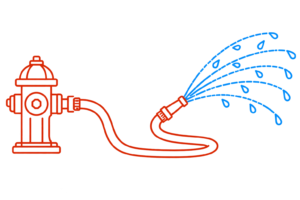
External hydrants provide fire-service water connection points around a building or site. In wildfire-prone areas they support defensive firefighting, hose deployment and protection of structures exposed to external fire.
Hydrant spacing, flow and residual pressure should be based on fire-service strategy and hydraulic design. Accessibility is as important as hydraulic capacity.
Image
Please download the PDF to have the information sent directly to your email address.
Healthcare Waste Insulation
Send download link to:
Implementation Guide
- Locate hydrants in consultation with fire-service access and hose deployment requirements
- Provide adequate flow and residual pressure under the design firefighting condition
- Maintain clear access and protect hydrants from parked vehicles, vegetation and impact
- Use frost protection and drainage where climate requires it
- Provide visible identification and site plans for private hydrant networks
- Section the network with valves where this improves resilience
- Flow-test and inspect hydrants periodically
Benefits and Limitations
Benefits
- Provides rapid water access for firefighters
- Supports exterior structure protection and site firefighting
- Reduces hose-lay distance from public mains
- Can be supplied by dedicated fire-water storage
- Supports large or remote sites
Limitations
- High cost if extensive underground mains are required
- Performance depends on available water and pump capacity
- Hydrants can be blocked by vehicles or vegetation
- Freeze or corrosion damage may occur
- Spacing and capacity vary by local requirements
Parameter and data
Application: Large plots, campuses, industrial/commercial sites and buildings requiring private fire-water points
Hydrant Types: Pillar or underground hydrants according to local practice and climate
Hydraulic Criteria: Flow and residual pressure determined by fire-service and hydraulic design; no universal value applies
Location: Accessible from fire appliance routes and clear of likely collapse/heat zones where practicable
Expected Service Life: Typically 30-50 years for mains/hydrant bodies; seals and valves require service
Maintenance: Flow/pressure testing, valve exercise, frost checks, corrosion inspection and access clearance
Indicative Regulatory References: EN 14384 for pillar hydrants; EN 14339 for underground hydrants where applicable; national fire-service and water-supply requirements
Please download the PDF to have the information sent directly to your email address.
Healthcare Waste Insulation
Send download link to:





