
Description
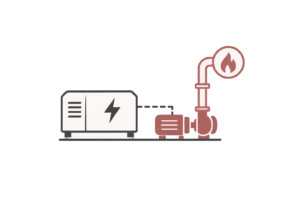
Backup power for fire pumps ensures that water-based firefighting systems remain operational if the normal electrical grid fails during wildfire or building fire. Backup may be an independent electrical supply, emergency generator or approved engine-driven pump arrangement.
This is especially important when the site relies on pumped fire-water systems rather than gravity or sufficient mains pressure.
Image
Please download the PDF to have the information sent directly to your email address.
Healthcare Waste Insulation
Send download link to:
Implementation Guide
- Determine whether fire-pump operation is safety-critical under loss of normal power
- Provide an independent or suitably protected secondary power source
- Protect switchgear, cabling, fuel supply and controls from the same fire event
- Provide automatic starting and transfer where required
- Maintain sufficient fuel or stored energy for the required duration
- Test the complete pump-under-backup-power sequence regularly
- Monitor generator/engine condition, batteries and fuel qualityÇ
Benefits and Limitations
Benefits
- Maintains sprinklers, hydrants and water-spray systems during grid failure
- Reduces common-mode failure of active systems
- Supports remote sites with unreliable supply
- Improves resilience during utility shutdowns
- Can support other critical fire-control equipment
Limitations
- High installation and maintenance cost
- Generators and fuel systems add their own hazards
- Poorly protected cabling can negate redundancy
- Stored fuel requires management
- Testing should include real load conditions
Parameter and data
Application: Electric fire pumps serving sprinklers, hydrants, external spray or other critical systems
Backup Options: Independent feeder, emergency generator, diesel/engine-driven pump or other approved arrangement
Starting: Automatic start on pressure drop/fire demand; transfer according to design
Protection: Fire-resilient routing or compartmentation for cabling/controls where required
Fuel / Autonomy: Capacity based on required firefighting duration and applicable standard
Expected Service Life: Generators/engines commonly 20-30 years; switchgear/controls 15-25 years
Maintenance: Load testing, fuel checks, battery maintenance and full pump sequence tests
Indicative Regulatory References: EN 12845 for sprinkler pump arrangements where applicable; national electrical, generator and fire-water requirements
Please download the PDF to have the information sent directly to your email address.
Healthcare Waste Insulation
Send download link to:





