
Description
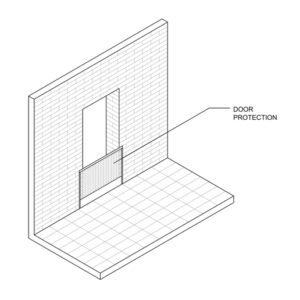
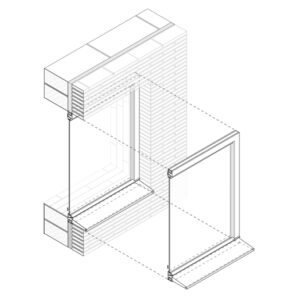
Flood protection for existing openings consists of adapting vulnerable doors, windows, garage entrances and other low-level openings to reduce floodwater ingress. Solutions may include raised thresholds, fixed barriers, removable panels or automatic flood-protection systems.
This strategy provides localized protection with relatively limited intervention and is particularly suitable for retrofit projects where full perimeter flood protection is not feasible.
Image
Please download the PDF to have the information sent directly to your email address.
Healthcare Waste Insulation
Send download link to:
Implementation Guide
- Identify vulnerable openings and determine the design flood level and required protection height
- Select an appropriate fixed, removable or automatic protection system
- Verify that surrounding walls, frames and anchors can resist the expected flood loads
- Provide continuous watertight seals at edges, thresholds and connections
- Ensure removable or automatic systems can be rapidly and reliably deployed
- Inspect and periodically test seals, fixings and operating mechanisms
Benefits and Limitations
Benefits
- Provides targeted protection at vulnerable flood-entry points
- Suitable for retrofit and space-constrained buildings
- Requires less intervention than full-building or perimeter protection
- Allows different protection systems to be adapted to individual openings
Limitations
- Protects only the openings where measures are installed
- Effectiveness depends on correct sealing, anchoring and installation
- Removable systems require adequate warning time and deployment
- Protection capacity is limited by the tested flood depth and surrounding structure
- Other flood-entry paths must be addressed separately
Parameter and data
Design: Localized opening protection designed for the expected flood depth and an appropriate safety margin, with verified structural resistance, continuous watertight sealing and secure anchoring to the surrounding construction
Materials and Components:
- Aluminium, steel or composite barriers
- Raised thresholds or fixed shields
- Guide rails and frames
- Rubber or elastomeric seals
- Structural anchors and fixings
- Automatic or self-closing devices where appropriate
Advantages: Flexible, retrofit-friendly and localized protection that reduces floodwater ingress with limited permanent intervention
Maintenance: Medium: periodic inspection of seals, guides, frames, anchors and operating mechanisms, together with functional testing of removable or automatic systems
Environmental Impact: Low: generally limited material use and localized intervention, with reusable components and minimal alteration to the building
Applicability Criteria: Suitable for existing doors, windows, garages and other low-level openings in flood-prone buildings where flood depths are reasonably predictable. Not suitable as the sole measure where flooding can enter through walls, floors, drainage systems or other unprotected routes
Expected service life: 10–25 years, depending on the selected protection system, exposure and maintenance. Seals, moving components and operating mechanisms may require earlier replacement
Please download the PDF to have the information sent directly to your email address.
Healthcare Waste Insulation
Send download link to:





