Description
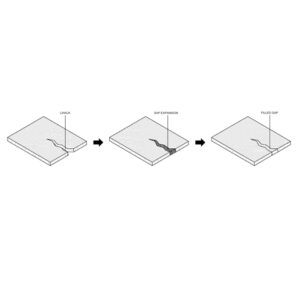
Self-sealing concrete incorporates active agents that can seal microcracks when exposed to moisture, reducing water ingress and improving durability. Depending on the technology, sealing may occur through crystalline reactions, swelling agents or bio-based mechanisms.
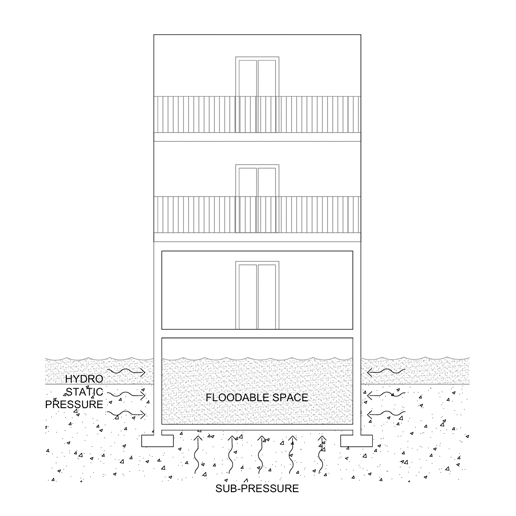
The solution is particularly suitable for concrete structures exposed to recurrent moisture, groundwater or flooding, but should be considered complementary to conventional waterproofing at joints, penetrations and other critical interfaces.
Image
Please download the PDF to have the information sent directly to your email address.
Healthcare Waste Insulation
Send download link to:
Implementation Guide
- Assess water exposure, crack risk and durability requirements
- Select a self-sealing technology appropriate to the expected conditions
- Integrate the selected agents into the concrete mix and ensure appropriate quality control, placement and curing
- Use conventional waterproofing at joints, penetrations and other critical interfaces
- Inspect performance and repair cracks exceeding the tested self-sealing capacity of the system
Benefits and Limitations
Benefits
- Reduces water ingress through microcracks
- Improves concrete durability and resistance to recurrent moisture exposure
- Reduces localized crack-repair and maintenance needs
- Can extend the service life of concrete structures
Limitations
- Self-sealing capacity is limited to relatively small cracks and depends on the selected technology
- Does not repair structural cracks or significant concrete damage
- Performance depends strongly on mix design, curing and exposure conditions
- Higher initial cost than conventional concrete
- Some self-healing technologies have more limited large-scale application experience
Parameter and data
Design: Concrete mix incorporating active agents that react in the presence of water to seal microcracks through crystalline growth, expansion or biological processes
Materials and Components: Depending on the selected technology:
- Cement, aggregates and water
- Crystalline additives
- Swelling agents or polymers
- Bio-based healing agents
- Conventional reinforcement where required
Application: Foundations, basements, retaining walls, underground structures, water-retaining structures and other concrete elements exposed to recurrent moisture or water pressure
Thickness: N/A – defined by the structural requirements of the concrete element
Permeability: Reduced water permeability through the self-sealing of microcracks. Performance depends on the selected technology, crack characteristics and exposure conditions
Advantages: Improved watertightness and durability, reduced crack-repair requirements and enhanced resilience to repeated water exposure
Maintenance: Low: generally limited to periodic inspection, with conventional repair required where cracks or damage exceed the self-sealing capacity of the system
Environmental Impact: Medium: active additives may increase the initial material impact, while improved durability and reduced repair requirements can reduce lifecycle material consumption
Applicability Criteria: Suitable for concrete structures exposed to recurrent moisture, groundwater or water pressure where microcracking and long-term durability are relevant. Not suitable as the sole waterproofing solution for structural cracks, joints, penetrations or major defects
Expected Service Life 50+ years for the concrete structural element, depending on structural design, exposure, construction quality and maintenance. The long-term self-sealing performance depends on the specific technology and should be verified for the selected system
Please download the PDF to have the information sent directly to your email address.
Healthcare Waste Insulation
Send download link to: