Description
Crystalline waterproofing admixtures are incorporated into fresh concrete to reduce water penetration through capillary pores and microcracks. In the presence of moisture, reactive compounds form insoluble crystalline structures within the concrete matrix, improving its watertightness.
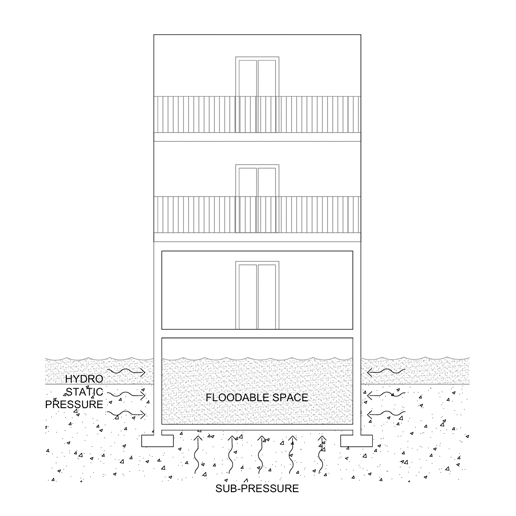
The solution is particularly suitable for basement slabs, foundations and other concrete elements exposed to groundwater or hydrostatic pressure. Joints, penetrations and significant cracks require complementary waterproofing measures.
Image
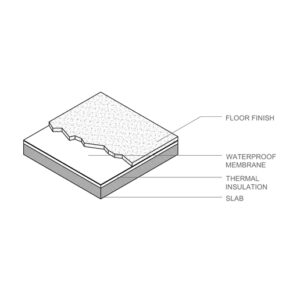
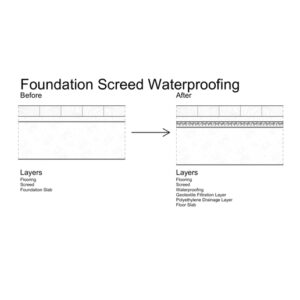
Please download the PDF to have the information sent directly to your email address.
Healthcare Waste Insulation
Send download link to:
Implementation Guide
- Assess groundwater conditions, hydrostatic pressure and required watertightness
- Select an admixture compatible with the concrete mix and exposure conditions
- Incorporate the product into fresh concrete following the specified dosage and mixing procedure
- Ensure appropriate concrete placement, compaction and curing
- Provide complementary waterstops or sealing at joints, penetrations and critical interfaces
- Inspect and repair significant cracks or construction defects that exceed the system’s capacity
Benefits and Limitations
Benefits
- Reduces water penetration through concrete pores and microcracks
- Provides integral waterproofing throughout the concrete mass
- Requires little maintenance and is protected from surface damage
- Can improve durability and reduce additional waterproofing interventions
Limitations
- Mainly applicable to new concrete or newly cast concrete elements
- Does not replace specific waterproofing at joints and penetrations
- Effectiveness depends on correct dosage, concrete quality and curing
- Significant cracks or structural defects require additional repair or waterproofing
Parameter and data
Design: Integral waterproofing system incorporated into the concrete mass, using reactive compounds that reduce capillary permeability and can react in the presence of moisture to seal small pores and microcracks
Materials and Components:
- Cementitious crystalline admixture
- Reactive chemical compounds
- Standard concrete components: cement, aggregates and water
- Complementary waterstops and joint-sealing systems where required
Advantages: Integral and durable waterproofing with low maintenance requirements, improved concrete watertightness and reduced vulnerability to localized surface damage
Maintenance: Low: generally limited to periodic inspection of the concrete element, joints and penetrations, with repair required where significant cracking or structural damage occurs
Environmental Impact: Low–Medium: the admixture requires additional material and chemical components, but its small dosage and potential to reduce supplementary waterproofing layers and future repairs can limit lifecycle impacts
Applicability Criteria: Suitable for new concrete slabs, foundations and underground structures exposed to groundwater or hydrostatic pressure. Less suitable as a direct retrofit solution for existing hardened concrete unless incorporated into a newly cast concrete layer or element
Expected Service Life: 50+ years, generally aligned with the service life of the concrete element, depending on concrete design, exposure conditions, construction quality and maintenance
Please download the PDF to have the information sent directly to your email address.
Healthcare Waste Insulation
Send download link to: