
Description
Temporary flood barriers are deployable systems installed before a flood event to prevent or reduce water entering a building or protected area. Systems may include modular panels, inflatable barriers or other removable flood-protection devices designed to resist temporary hydrostatic loads.
They are particularly suitable where permanent barriers are not feasible or where flood protection is required only during predictable events.
Image
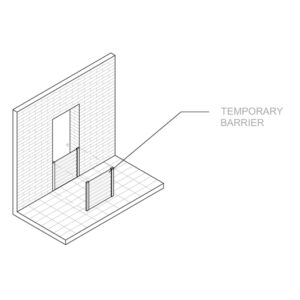
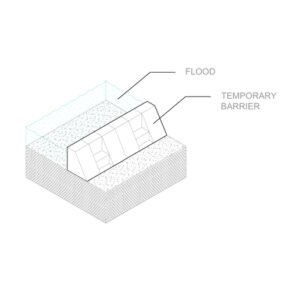
Please download the PDF to have the information sent directly to your email address.
Healthcare Waste Insulation
Send download link to:
Implementation Guide
- Identify vulnerable areas and determine the design flood conditions and required protection height
- Select a barrier system tested or designed for the expected water depth and loads
- Verify ground conditions, anchoring and continuous sealing along the protected perimeter
- Provide accessible and dry storage close to the deployment area
- Establish clear deployment procedures, responsibilities and required warning time
- Regularly inspect, clean and test the system through deployment drills
Benefits and Limitations
Benefits
- Provides flexible and adaptable flood protection
- Can protect larger areas without permanent visual or spatial impact
- Generally requires less permanent construction than fixed barriers
- Can complement permanent building-protection measures
Limitations
- Effectiveness depends on adequate warning time and correct deployment
- Requires trained personnel, storage and operational planning
- Leakage, poor ground sealing or incorrect installation can reduce performance
- Protection is limited to the tested capacity of the selected system
- May be vulnerable to high flow velocities, debris impact or long-duration flooding
Parameter and data
Design: Deployable barrier system designed for the expected flood depth and relevant hydraulic loads, with continuous sealing, adequate stability and suitable anchoring or support conditions
Materials and Components:
- Modular aluminium, steel or composite panels
- Inflatable or water-filled barriers
- Flexible flood barriers
- Watertight seals and membranes
- Anchoring or stabilization systems
- Storage and deployment equipment
- Sandbags for emergency or supplementary use where appropriate
Advantages: Flexible and reusable protection with limited permanent intervention, suitable for temporary or complementary flood-protection strategies
Maintenance: Medium–High: regular inspection of panels, membranes, seals and anchoring components; appropriate cleaning and dry storage; and periodic deployment drills to verify readiness
Environmental Impact: Low–Medium: limited permanent construction and reusable systems can reduce material impacts, although some temporary products, damaged components or single-use solutions may generate waste
Applicability Criteria: Suitable for buildings, sites and access areas exposed to predictable flooding where sufficient warning time, storage capacity and trained personnel are available. Not suitable as the sole protection where flooding develops too rapidly for deployment, where very high hydraulic loads are expected or where reliable installation cannot be guaranteed
Expected Service Life: 10–30 years for reusable barrier systems, depending on material, frequency of deployment, storage conditions and maintenance. Seals, membranes and other flexible components may require earlier replacement
Please download the PDF to have the information sent directly to your email address.
Healthcare Waste Insulation
Send download link to:





