
Description
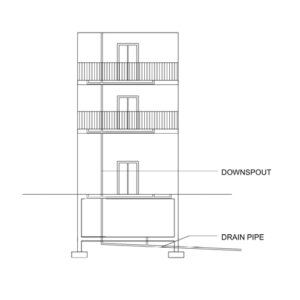
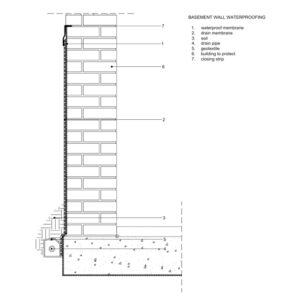
Ground floor or basement drainage is a flood-tolerant strategy designed to collect and remove water that enters low-level building spaces during flood events. Rather than relying exclusively on flood exclusion, the system manages controlled water ingress through drainage layers, collection points and pumping systems.
The measure reduces water residence time, limits damage and facilitates cleaning, drying and post-flood recovery.
Image
Please download the PDF to have the information sent directly to your email address.
Healthcare Waste Insulation
Send download link to:
Implementation Guide
- Assess expected flood depth, water inflow and duration
- Provide perimeter, underfloor or combined drainage leading to collection points at the lowest level
- Size sumps and pumps according to the expected inflow and provide backup power where required
- Ensure water is discharged to a safe location without causing re-flooding
- Provide controlled water entry and drainage where part of the flood-tolerant strategy
- Ensure accessible inspection points and regularly test drainage and pumping systems
Benefits and Limitations
Benefits
- Reduces water accumulation and flood duration inside the building
- Limits damage and supports faster drying and recovery
- Compatible with floodable lower floors and other flood-tolerant strategies
- Can manage recurrent or predictable water ingress effectively
Limitations
- Does not prevent floodwater from entering the building
- Depends partly on pumps, controls and reliable backup power
- Requires regular inspection, cleaning and functional testing
- Effectiveness depends on sufficient drainage and pumping capacity
- Requires a safe discharge route that remains operational during flooding
Parameter and data
Design: Continuous perimeter and/or underfloor drainage connected to collection sumps at low points, with pumping capacity sized to expected inflow, backup power where required and a safe discharge route
Materials and Components:
- Gravel or granular drainage layers
- Perforated drainage pipes
- Geotextiles
- Collection sumps
- Sump pumps
- Level controls
- Non-return and isolation valves
- Discharge pipework
- Backup power systems where required
Advantages: Reduces water residence time and supports controlled flooding, rapid drainage and faster post-flood recovery in basements and low-level spaces
Maintenance: Medium–High: regular pump and control testing, sump cleaning and inspection of accessible pipes, inlets, outlets and backup-power systems, with additional checks following flood events
Environmental Impact: Medium: pumps require operational energy and discharged floodwater may require appropriate management, while reduced flood duration can limit damage and material replacement
Applicability Criteria: Suitable for basements, ground floors and other flood-tolerant spaces where controlled water ingress can be safely collected and discharged. Not suitable where adequate maintenance, backup power or a reliable discharge route cannot be ensured
Expected Service Life: 20–40+ years for permanent drainage layers and pipework, depending on materials and installation. Pumps, controls, valves and backup-power components generally require earlier maintenance or replacement
Please download the PDF to have the information sent directly to your email address.
Healthcare Waste Insulation
Send download link to:





