Description
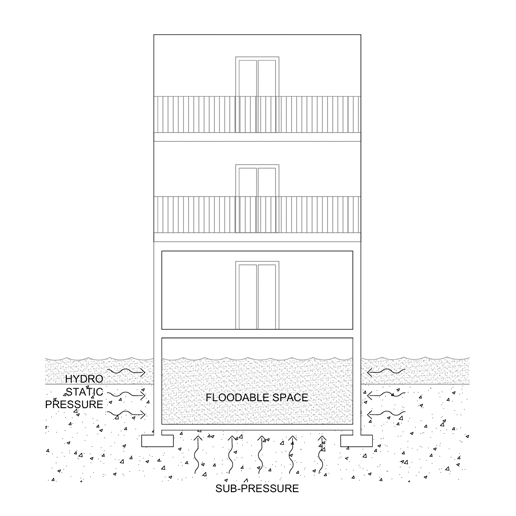
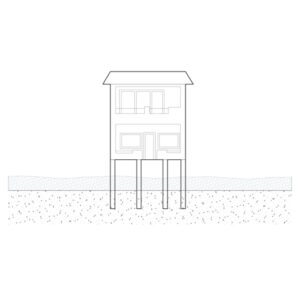
Flood-resilient zoning divides a building into floodable and protected compartments to limit the spread of floodwater within the building. Rather than preventing all water entry, the strategy allows controlled flooding in selected areas while protecting critical spaces, equipment and essential circulation routes.
It is particularly suitable for retrofit projects where complete building waterproofing is not feasible, reducing damage and supporting faster and more targeted post-flood recovery.
Image
Please download the PDF to have the information sent directly to your email address.
Healthcare Waste Insulation
Send download link to:
Implementation Guide
- Identify floodable and protected zones according to flood risk and building function
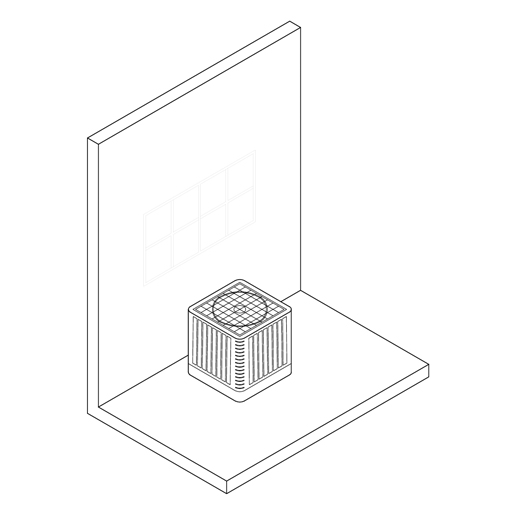
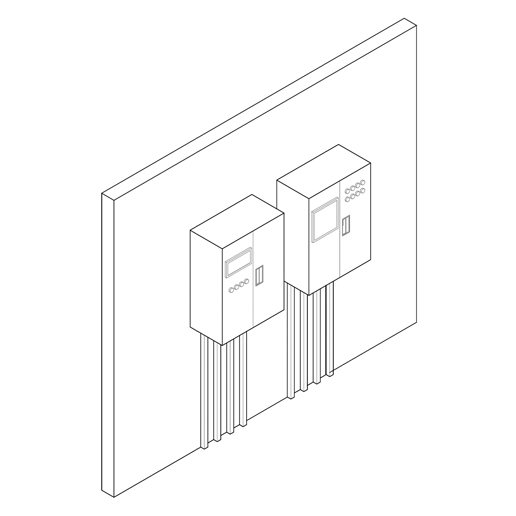
- Locate critical equipment, services and essential spaces within protected zones
- Use water-resistant or watertight partitions, doors and raised thresholds where required
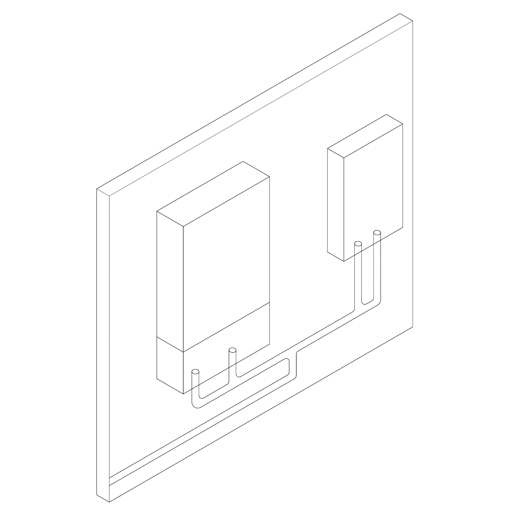
- Seal joints and service penetrations to prevent water transfer between compartments
- Provide water-resistant materials and drainage in floodable areas
- Establish clear operating, inspection and post-flood recovery procedures
Benefits and Limitations
Benefits
- Limits the spread and extent of internal flood damage
- Protects critical spaces, equipment and building services
- Reduces repair costs and supports targeted recovery
- Provides an adaptable retrofit strategy when full floodproofing is impractical
Limitations
- Does not prevent floodwater from entering the building
- Effectiveness depends on continuous sealing at partitions, doors and service penetrations
- May reduce spatial flexibility and require modification of existing services
- Requires operational planning and clear identification of floodable and protected areas
Parameter and data
Design: Building divided into defined floodable and protected compartments with water-resistant or watertight boundaries, sealed service penetrations and critical functions located within protected zones
Materials and Components:
- Water-resistant or watertight partitions
- Flood-resistant doors
- Seals and waterstops
- Raised thresholds or internal flood barriers
- Sealed service penetrations
- Water-resistant finishes
- Drainage or pumping systems where required
Advantages: Limits internal flood propagation, protects critical functions and enables phased and targeted post-flood recovery
Maintenance: Low–Medium: periodic inspection of partitions, doors, seals, thresholds and service penetrations, together with testing of drainage or movable barriers where installed
Environmental Impact: Low: targeted intervention generally requires limited additional material compared with full-building floodproofing and can reduce post-flood demolition and replacement
Applicability Criteria: Suitable for flood-prone buildings, particularly retrofit projects and facilities where specific rooms, equipment or functions must remain protected. Most effective where floodable and protected zones can be clearly defined and service penetrations can be adequately sealed
Expected Service Life: 20–40+ years for permanent partitions and compartmentation elements, depending on materials and exposure. Seals, doors and movable components may require earlier maintenance or replacement
Please download the PDF to have the information sent directly to your email address.
Healthcare Waste Insulation
Send download link to: