
Description
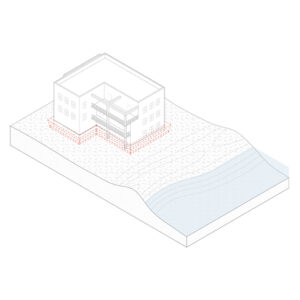
Basement wall waterproofing is a permanent protection measure that limits water ingress through underground walls by creating a continuous waterproof barrier. External waterproofing is generally preferred because it protects the wall directly from groundwater and moisture exposure, while internal systems can provide complementary or corrective protection where exterior access is not feasible.
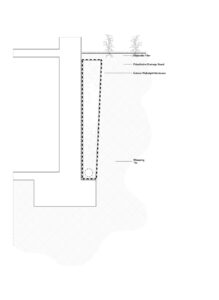
The system typically combines waterproofing, protection and drainage layers, with careful detailing at wall–floor joints, penetrations and other vulnerable interfaces.
Image
Please download the PDF to have the information sent directly to your email address.
Healthcare Waste Insulation
Send download link to:
Implementation Guide
- Assess groundwater conditions, expected water pressure and the structural condition of basement walls
- Prefer external waterproofing where feasible and prepare the substrate by repairing cracks and irregularities
- Install a continuous membrane or waterproof coating with appropriate protection and drainage layers
- Ensure continuity between wall and floor/foundation waterproofing and seal all joints and service penetrations
- Provide perimeter drainage where required to control water accumulation and pressure
- Inspect the completed system and ensure drainage remains accessible where possible
Benefits and Limitations
Benefits
- Prevents or significantly reduces water infiltration through basement walls
- Protects underground structures from moisture-related deterioration
- Provides effective long-term protection against groundwater and lateral water exposure
- Can be integrated with floor waterproofing to create a continuous protected envelope
Limitations
- External retrofit normally requires excavation and can be costly and disruptive
- Performance depends strongly on continuity at joints, penetrations and interfaces
- Drainage failure can increase water pressure against the basement wall
- Repairs to buried waterproofing systems can be difficult and expensive
- Internal systems do not protect the structure itself from external water exposure
Parameter and data
Design: Continuous waterproofing system designed for the expected groundwater and flood conditions, integrated with the basement structure, floor waterproofing and drainage strategy. Particular attention is required at wall–floor joints, penetrations and changes in geometry
Materials and Components:
- Waterproof membranes: bituminous, PVC or HDPE
- Liquid-applied waterproof coatings
- Geotextiles
- Drainage panels
- Gravel drainage layers
- Perforated drainage pipes
- Protective boards or mortars
- Waterstops and compatible sealants
Advantages: Durable and continuous protection against groundwater and lateral water ingress, particularly effective when applied externally and integrated with floor waterproofing
Maintenance: Low–Medium: periodic inspection of accessible drainage outlets, internal signs of moisture, joints and exposed interfaces, with cleaning of drainage systems where required. Buried waterproofing generally requires intervention only if failure is detected
Environmental Impact: Medium: external retrofit may require significant excavation and additional membranes, drainage layers and protective materials. Long service life and reduced moisture-related deterioration can reduce future repair and replacement needs
Applicability Criteria: Suitable for basements, underground structures and buildings exposed to groundwater or lateral water infiltration. External systems are most appropriate where perimeter excavation is feasible. Internal corrective systems may be considered where exterior access is restricted
Expected Service Life: 30–50 years for the main waterproofing system, depending on membrane type, installation quality, groundwater conditions and protection. Sealants, joints and drainage components may require earlier maintenance or replacement
Please download the PDF to have the information sent directly to your email address.
Healthcare Waste Insulation
Send download link to:





