
Description
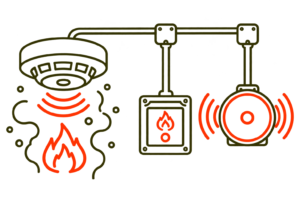
A fire alarm system communicates a confirmed or suspected fire condition to building occupants and responsible staff using audible alarms, visual alarm devices and, in larger or complex buildings, voice messages. It translates detection into human action.
For wildfire resilience, the alarm strategy should distinguish building fire alarms from wider civil-protection warnings where possible, while ensuring occupants receive clear instructions if evacuation or shelter actions are required.
Image
Please download the PDF to have the information sent directly to your email address.
Healthcare Waste Insulation
Send download link to:
Implementation Guide
- Define alarm zones and evacuation logic in the fire strategy
- Provide sounders and visual alarm devices to achieve required coverage
- Use voice alarm in complex or staged-evacuation buildings where it improves clarity
- Provide manual call points and protected standby power
- Coordinate alarm outputs with doors, smoke control, suppression and lifts
- Develop messages that avoid confusion between internal fire and external wildfire warnings
- Test audibility, visibility, interfaces and standby power regularly
Benefits and Limitations
Benefits
- Rapidly alerts occupants and staff
- Supports organised evacuation
- Voice systems can provide clear instructions
- Interfaces with other fire-safety systems
- Allows manual alarm initiation
Limitations
- Does not detect fire unless linked to detection/manual initiation
- Audibility can be affected by noise or hearing impairment
- False alarms reduce trust
- Voice systems require careful message planning
- Requires recurring testing and maintenance
Parameter and data
Application: Occupied buildings, public facilities, workplaces, schools, healthcare and complex sites
Notification: Audible sounders, visual alarm devices and voice alarm/PA where appropriate
Manual Initiation: Manual call points according to the applicable design standard
Control: Fire alarm control panel, zoning, event logging, fault monitoring and interfaces
Standby Power: Secondary supply sized for required monitoring and alarm duration
Expected Service Life: Control/notification equipment commonly 10-15+ years; batteries require earlier replacement
Maintenance: Alarm tests, device checks, battery replacement, interface verification and message review
Indicative Regulatory References: EN 54 series, including relevant control, sounder, visual alarm and voice alarm components; national fire alarm and evacuation requirements
Please download the PDF to have the information sent directly to your email address.
Healthcare Waste Insulation
Send download link to:





