
Description
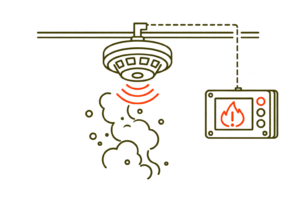
Smoke detection systems identify airborne combustion products during the early stages of many fires. Point optical detectors, multi-sensor detectors and aspirating systems can provide earlier warning than heat detection for smouldering or developing fires.
Wildfire smoke creates a special challenge because it can infiltrate a building without an internal fire. Zoning and alarm logic should reduce nuisance alarms without delaying genuine response.
Image
Please download the PDF to have the information sent directly to your email address.
Healthcare Waste Insulation
Send download link to:
Implementation Guide
- Select detector type based on expected fire signature, ceiling geometry, airflow and environmental conditions
- Coordinate detector spacing with ceilings, beams and ventilation
- Use multi-criteria or aspirating systems where very early warning or nuisance-alarm discrimination is important
- Consider HVAC smoke-isolation logic separately from building-fire alarm logic where external smoke infiltration is credible
- Provide accessible testing and maintenance arrangements
- Monitor contamination/drift where supported
- Review performance after ventilation or room-use changes
Benefits and Limitations
Benefits
- Early detection of many developing fires
- Wide range of detector technologies
- Can initiate automatic protective actions
- Supports rapid investigation
- Aspirating systems suit sensitive or high-value spaces
Limitations
- External wildfire smoke can create nuisance alarms
- Dust, steam and aerosols can affect reliability
- Point detectors may be slow in very high spaces
- Sensitivity degrades with contamination
- Not all fires produce strong smoke early
Parameter and data
Application: Occupied spaces, corridors, offices, accommodation, data rooms and storage
System Types: Point optical, multi-sensor and aspirating smoke detection
Environmental Factors: Air velocity, ceiling height, dust/steam, external smoke infiltration and ventilation strategy
Interfaces: Fire alarm, HVAC shutdown/isolation and smoke control where required
Expected Service Life: Fire alarm, HVAC shutdown/isolation and smoke control where required
Maintenance: Cleaning, functional testing, contamination monitoring and device replacement
Indicative Regulatory References: EN 54 series, including EN 54-7 for point smoke detectors and EN 54-20 for aspirating systems where applicable; national fire-alarm design rules
Please download the PDF to have the information sent directly to your email address.
Healthcare Waste Insulation
Send download link to:





