
Description
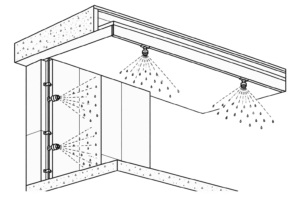
Cooling uses hose streams or manually controlled water application to cool vulnerable surfaces, damp local fuels or extinguish small ember ignitions. It can be useful as a supplementary measure before direct wildfire conditions become too dangerous.
It must never encourage occupants to delay evacuation or remain outdoors in hazardous smoke, flame or wind conditions.
Image
Please download the PDF to have the information sent directly to your email address.
Healthcare Waste Insulation
Send download link to:
Implementation Guide
- Identify limited, defensible target areas such as roof edges or small external ignitions
- Provide accessible hose points with adequate water supply and pressure
- Define authorised operators and clear stop criteria in favour of evacuation
- Do not rely on manual wetting as the primary protection for combustible roofs or façades
- Consider electrical equipment and slip hazards
- Coordinate manual actions with fire-service access and site emergency procedures
- Inspect hoses, nozzles and water points and conduct drills
Benefits and Limitations
Benefits
- Low capital cost where water points already exist
- Can extinguish small ember ignitions early
- Provides flexible local cooling
- Useful for trained site teams
- Simple technology with limited specialist equipment
Limitations
- Strongly dependent on human presence and judgement
- Unsafe during severe wildfire exposure
- Limited throw, flow and area coverage
- May consume significant water
- Must not delay evacuation or substitute for engineered suppression
Parameter and data
Application: Small local exposures and trained facility teams before severe wildfire conditions
Equipment: Hose reels, hoses, nozzles and protected water points
Water Supply: Adequate flow and pressure without compromising critical automatic systems
Operating Criteria: Use only under predefined safe conditions; stop immediately if evacuation is ordered or exposure becomes unsafe
Expected Service Life: Hose equipment approximately 10-20 years depending on product and exposure
Maintenance: Inspection, hose/nozzle testing, valve operation and drills
Indicative Regulatory References: National fire-service and occupational-safety requirements; EN 671 series where hose systems fall within scope
Please download the PDF to have the information sent directly to your email address.
Healthcare Waste Insulation
Send download link to:





